Placing the desk where the light works for you
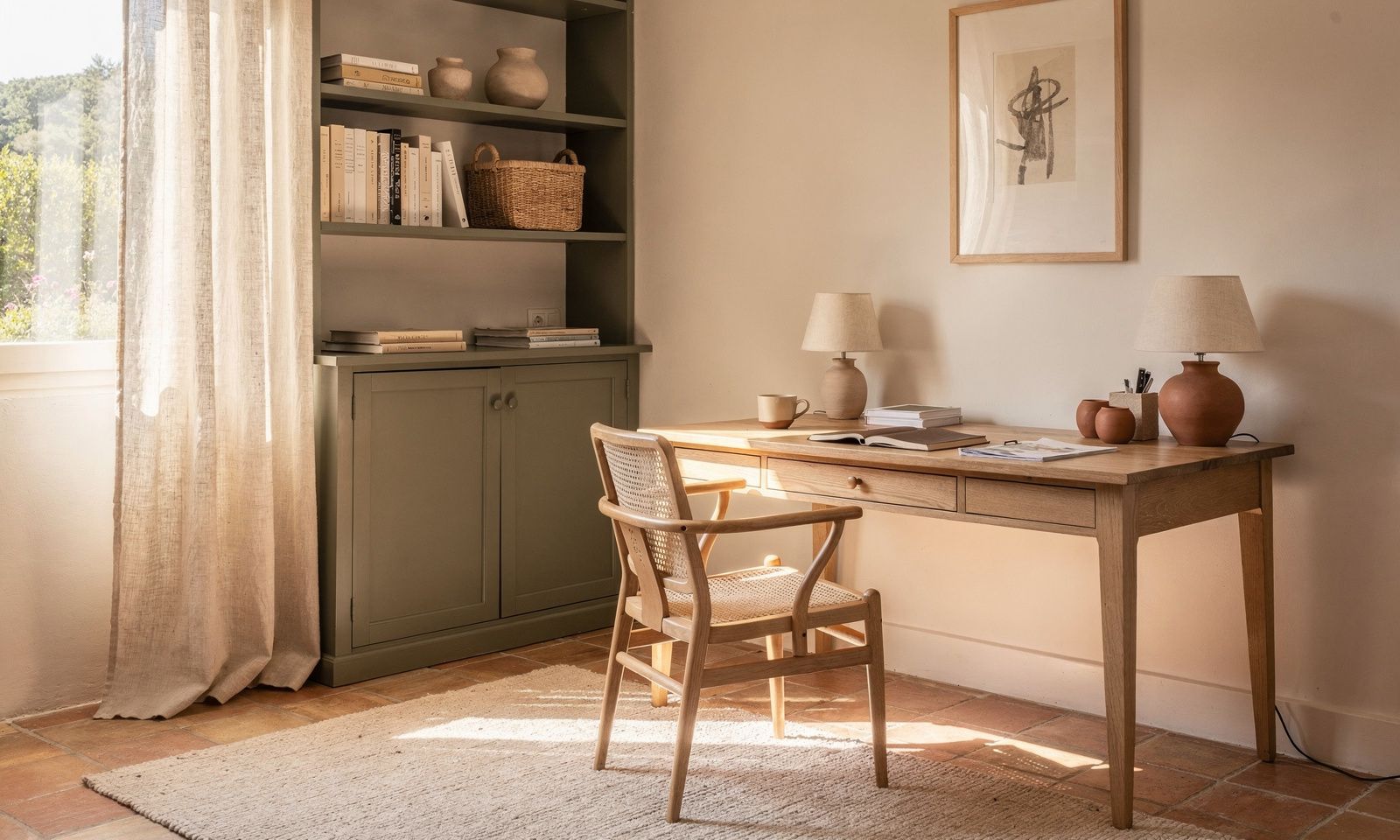
Before we think about furniture, we look at the light. A home office feels right when brightness arrives from the side, neither behind you nor straight across the screen. In Plascassier, mornings offer a gentle light that lays down few reflections. We happily set the work surface near a window facing east or north, where daylight stays steady without dazzling.
A separate room is not always needed. A corner of the living room, the end of a landing, an alcove under a slope will often do, as long as they are clearly framed. A rug, a slightly deep console, a shelf that climbs the wall, and the corner becomes a real place to work. We like to leave a little bare wall in front of the desk, to rest the eye between tasks.
We also check the flow around the seat. You should be able to push the chair back without hitting anything, and come and go without disturbing the rest of the house. A good home office is forgotten when unused, and found again in one step when needed.
A soft, warm palette for the turning season
Summer slips away, and interiors ask for tones that warm without darkening. We often start from an off-white with a hint of pink on the walls, a base that keeps the room bright while softening the low September light. On that canvas we place earth tones, a calm terracotta, a powdery ochre, a warm brown that echoes the local stone.
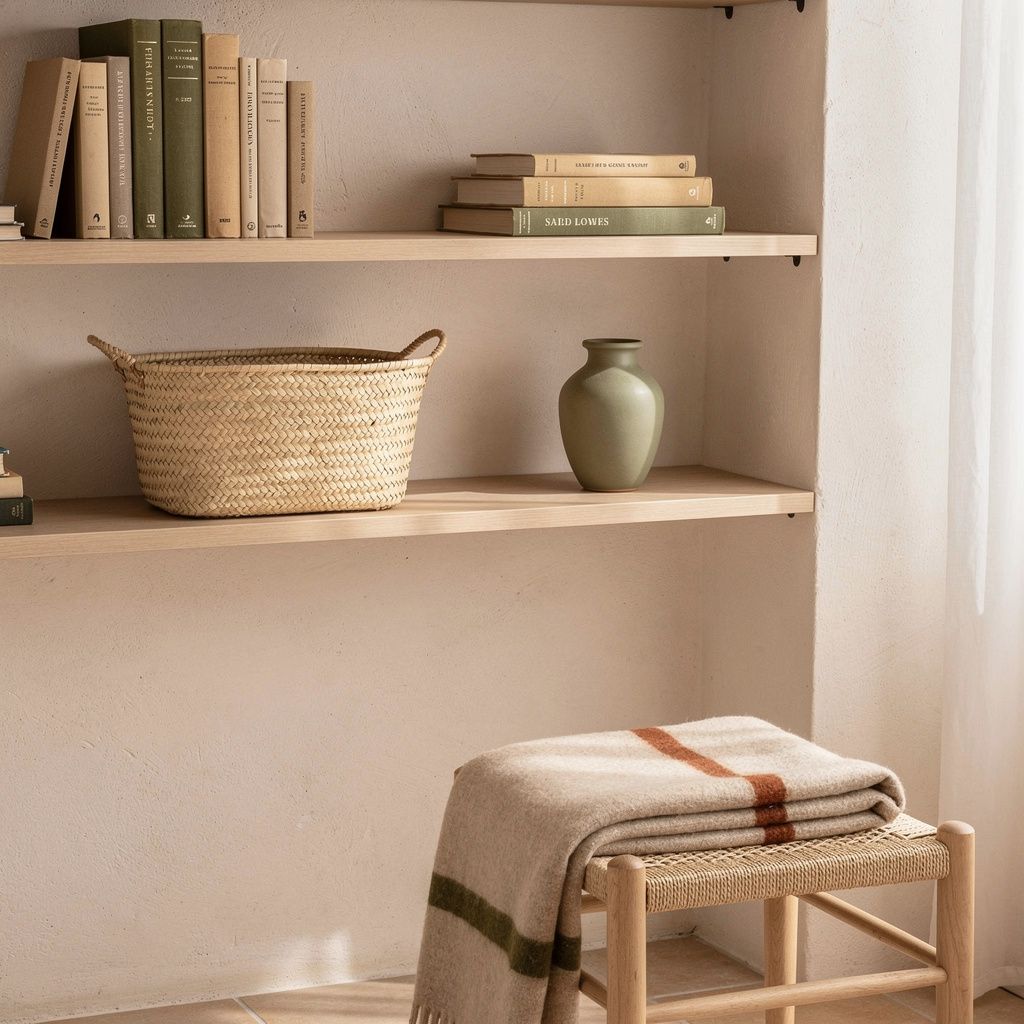
Green stays our ally for a desk. A smoky olive on a cabinet, a sage green on a panel, and the eye relaxes. These greens live well with pale wood and the light of the Côte d'Azur. We keep them in touches, on a drawer, a book spine, a vase, rather than across a whole wall, so the room can breathe.
A warm palette does not mean a busy one. We limit the strong colours to two or three, and let the materials carry the rest. Linen, rattan and matte ceramic already say a great deal, with no need to add more.
Natural materials that last
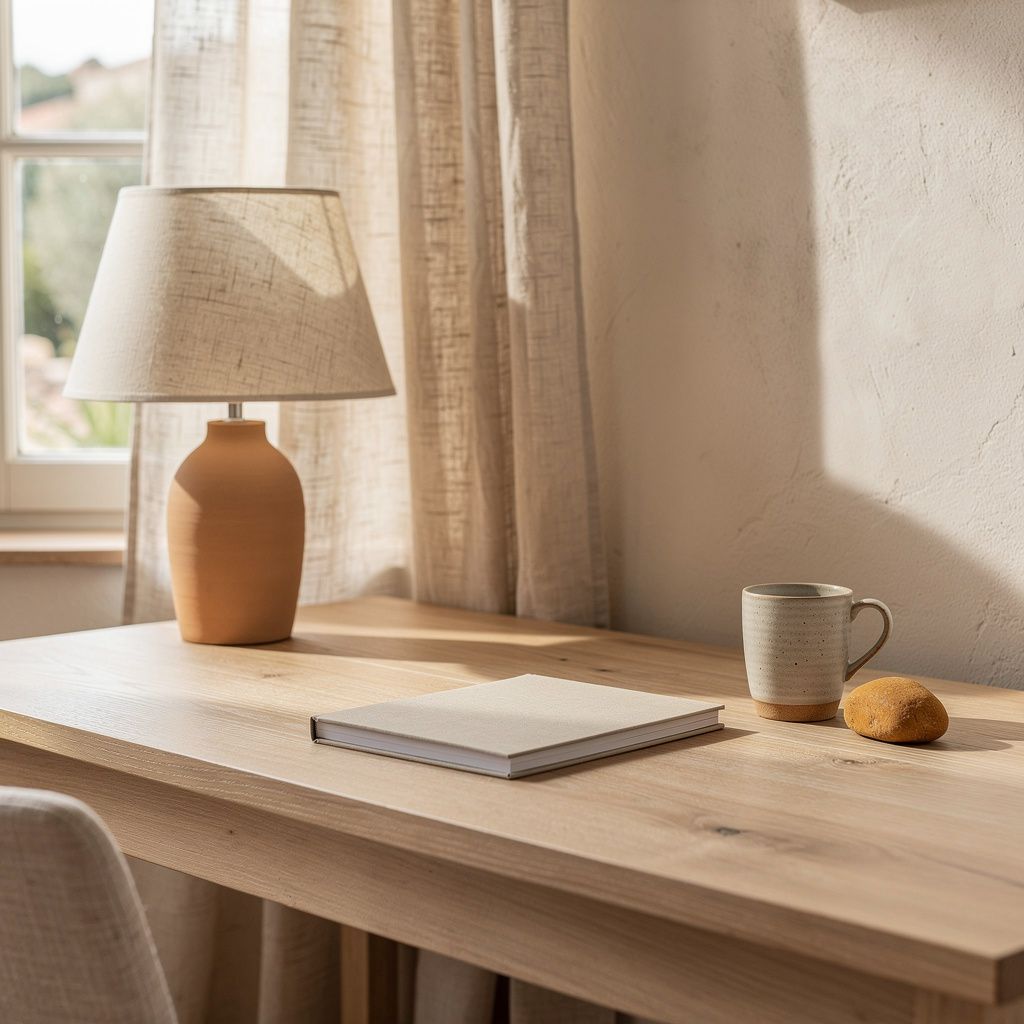
A desk is touched as much as it is looked at. We like solid wood tops, an open-grained ash or oak, oiled rather than varnished, which takes on a fine patina with use. A stone or cast mineral top, left matte, holds cups and pens without marking, and keeps a pleasant coolness under the hand.