A passage deserves better than being a corridor
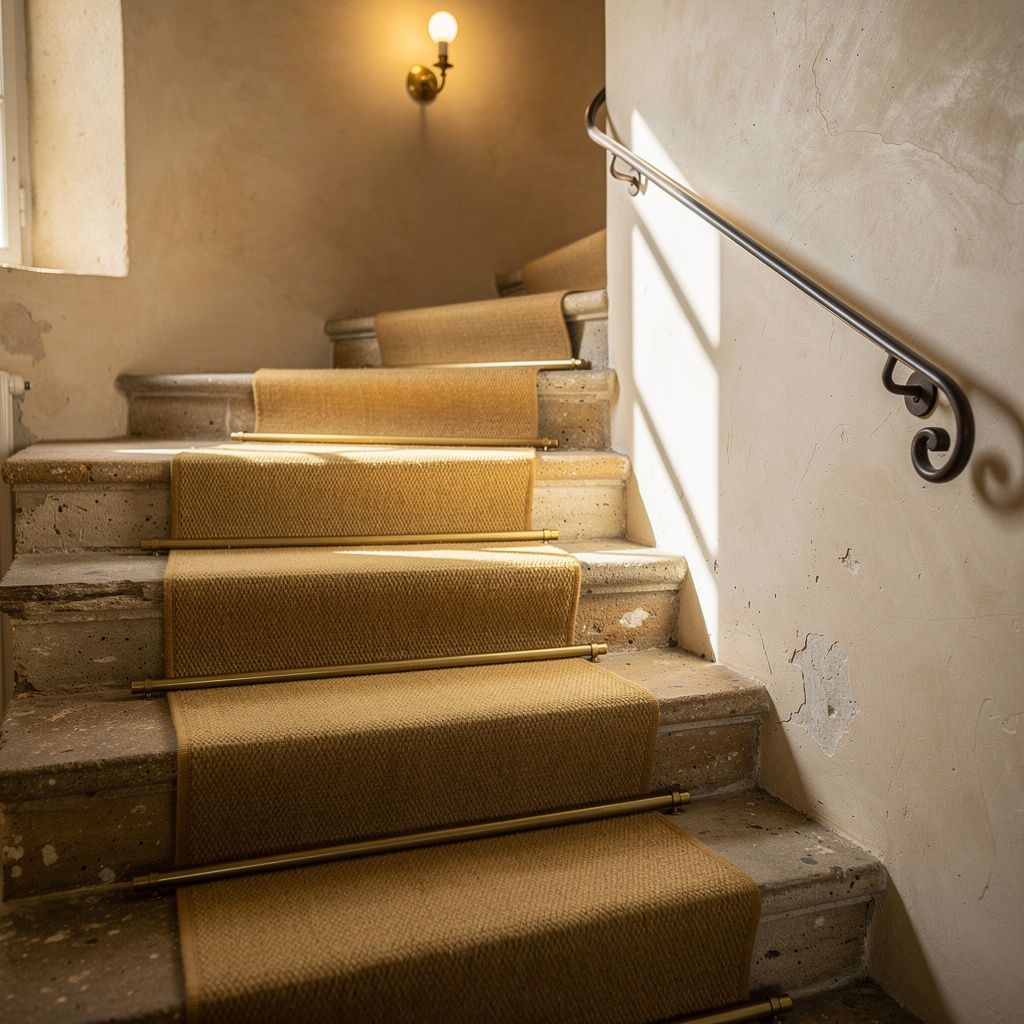
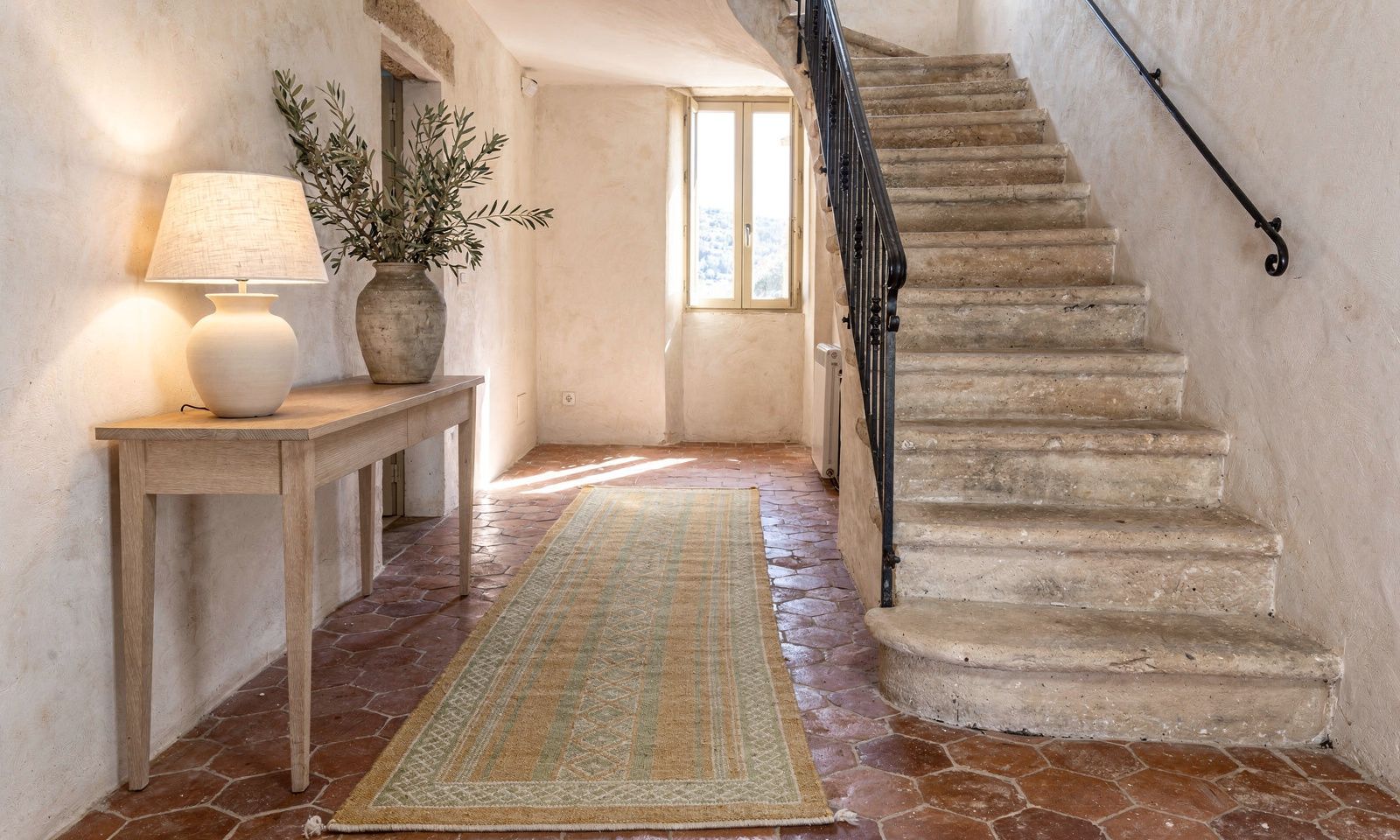
Space is tight in a Grasse village house. The volumes stretch upward rather than outward, and circulation usually takes the form of a narrow hallway that runs into a stone staircase. For years these spaces were treated as service areas, painted white and left empty. You feel the result immediately. People move through quickly, nobody lingers, and the house reads as a set of disconnected rooms.
We prefer to treat them as rooms in their own right, with their own light, their own materials and their own rhythm. A well considered hallway does not slow you down, it softens the way you move. It announces what comes next and ties the rooms together instead of separating them. It is also the cheapest part of the house to change, because the surface is small and every decision shows.
Light is the first material
Many old hallways have a single opening, sometimes none at all. In Grasse the light usually arrives through a tall narrow window at the far end, and it shifts a great deal across the day. We always watch what happens between nine in the morning and late afternoon before deciding anything.
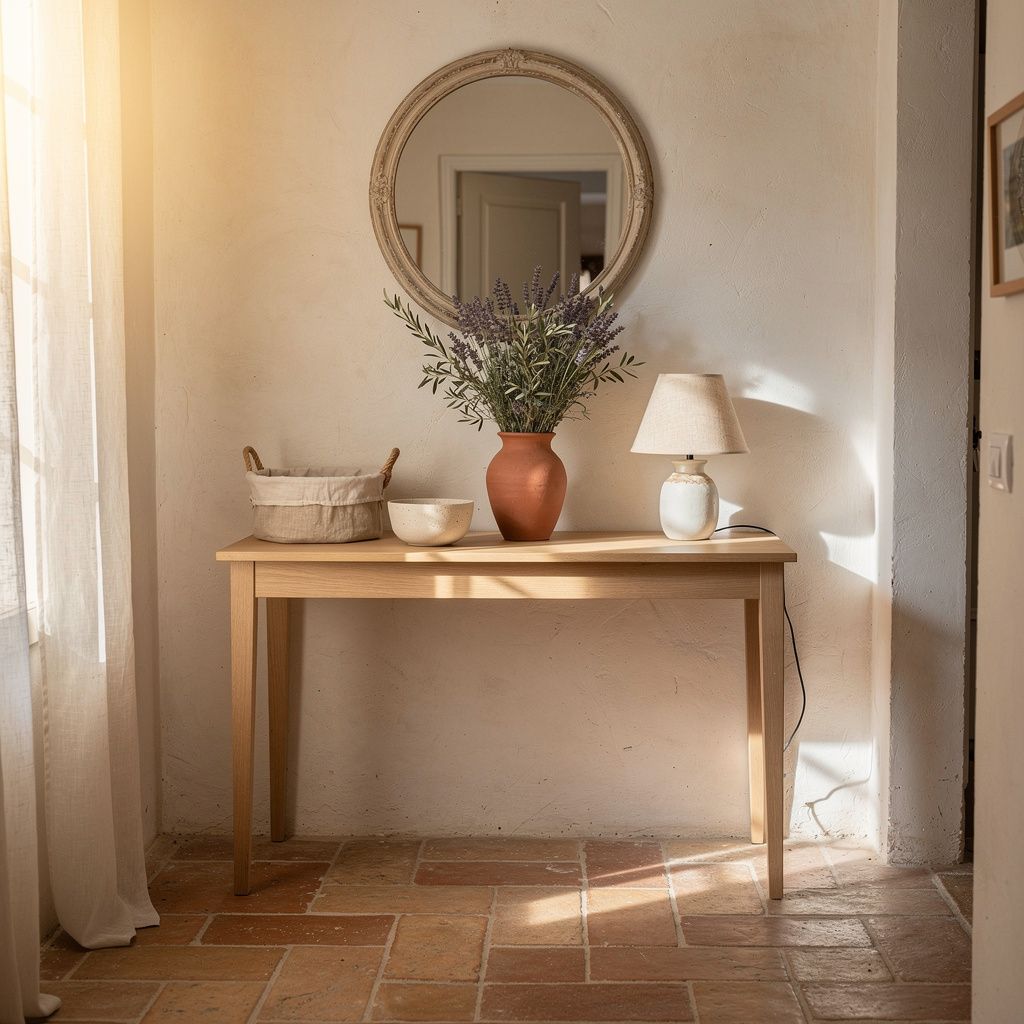
Where daylight is missing, we replace it with several low sources rather than one ceiling fitting. A wall light at mid height, a small lamp on a console, a soft light at the top of the stairs. Three warm points beat a single overhead beam that flattens every texture. Bulbs around 2700 kelvin keep lime plaster and terracotta warm. Go cooler than that and the lime turns grey while the tiles lose their glow.
A well placed mirror does similar work. Facing a window or set slightly at an angle, it throws light toward the far end and doubles the depth you perceive.
Materials that absorb sound and cold
A bare passage echoes. Hard floors, smooth walls and an absence of textiles turn every footstep into a ring. That is one of the reasons these spaces feel unwelcoming, long before anyone raises a question of taste.
So we work in layers. On the floor, old terracotta, worn tomette tiles and local stone stay cool in summer and warm slowly through autumn. On the walls, a lime plaster or a limewash gives a slightly uneven surface that catches light and breaks up reverberation. Linen, wool and rush do the rest. A linen curtain across a door you rarely use, a flat woven wool runner, a fibre basket tucked under the console. Each element softens the acoustics as much as the mood.
As the season turns we like to add a wool throw over a bench or a pair of cotton velvet cushions. These are reversible gestures that follow the calendar without changing anything underneath.