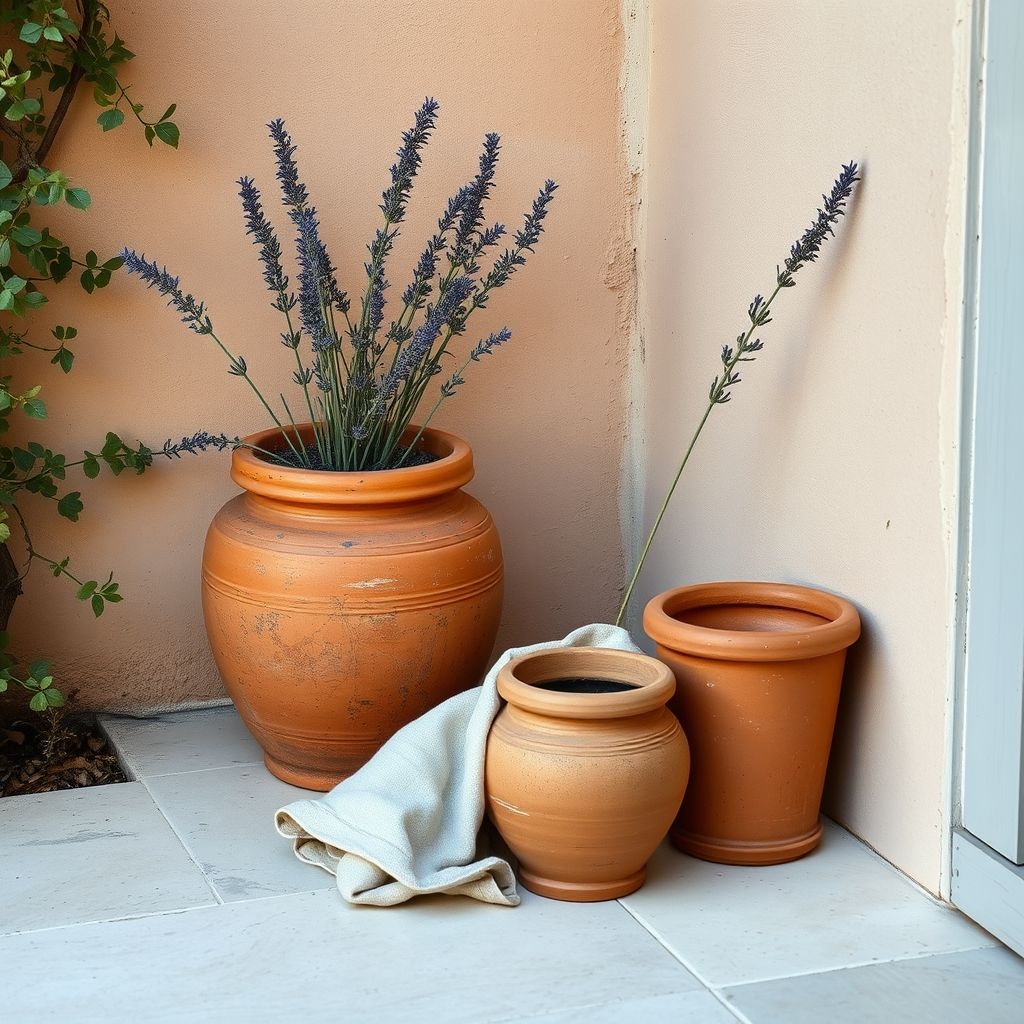
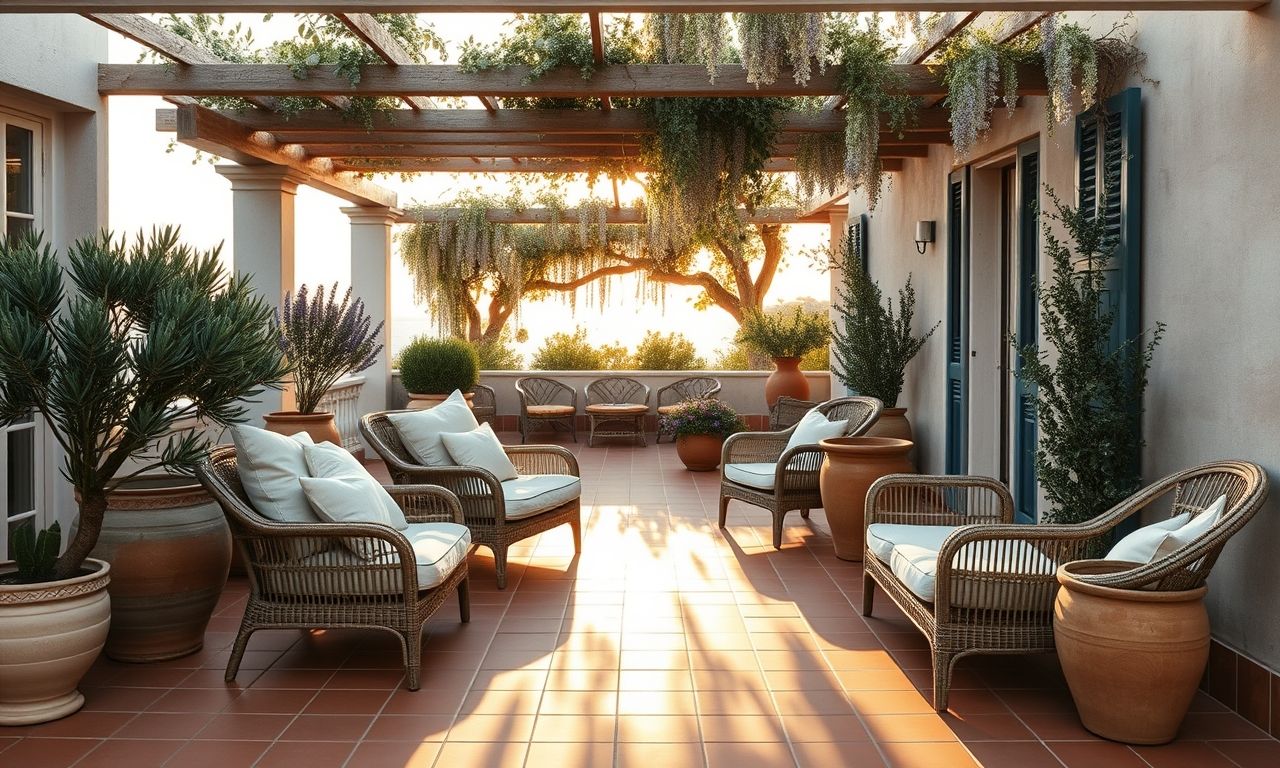
In Antibes, summer moves the house outdoors. As soon as the first real heat arrives, life leaves the living room for the terrace and the garden. At Emicasa Atelier, we treat these spaces as proper rooms. Here is how we put them together so they hold up all season and stay pleasant when autumn comes back.
Treating the terrace as an extra room
A good terrace is more than a floor and a few chairs. It is a place with its own uses, its own hours, its own moods. We always start by watching how the family lives outside. Where do you have coffee in the morning, where do you dine when it is still thirty degrees at nine in the evening, where do you like to read in the shade in the afternoon. Those answers draw zones, and each zone deserves its own treatment.
In Antibes, many terraces face the sea or a walled garden. We like to keep an open view on one side and set the seating against the other, along a warm wall or a hedge. People feel calmer with something behind their back. The rest follows that simple idea. A dining corner, a lower and softer sitting corner, sometimes a small water feature that brings a cool sound.
A floor that ties inside to outside
The floor does almost everything. It is what tells you whether you are still in the house or already in the garden. We love terracotta, old hexagonal tiles, pale limestone that returns the light without glare. These materials warm gently in the sun and stay cool in the shade, which matters when you walk barefoot from June to September.
When the indoor floor and the outdoor floor answer each other, the house feels quieter. A terracotta floor that runs from the kitchen out to the terrace erases the border. You no longer feel that you are stepping out, you simply move across. For more contemporary terraces, a sand-toned stoneware or a beige reconstituted stone gives the same effect with less upkeep. We avoid cold tones and shiny surfaces, which fight with the light here.
Materials that age well in the sun
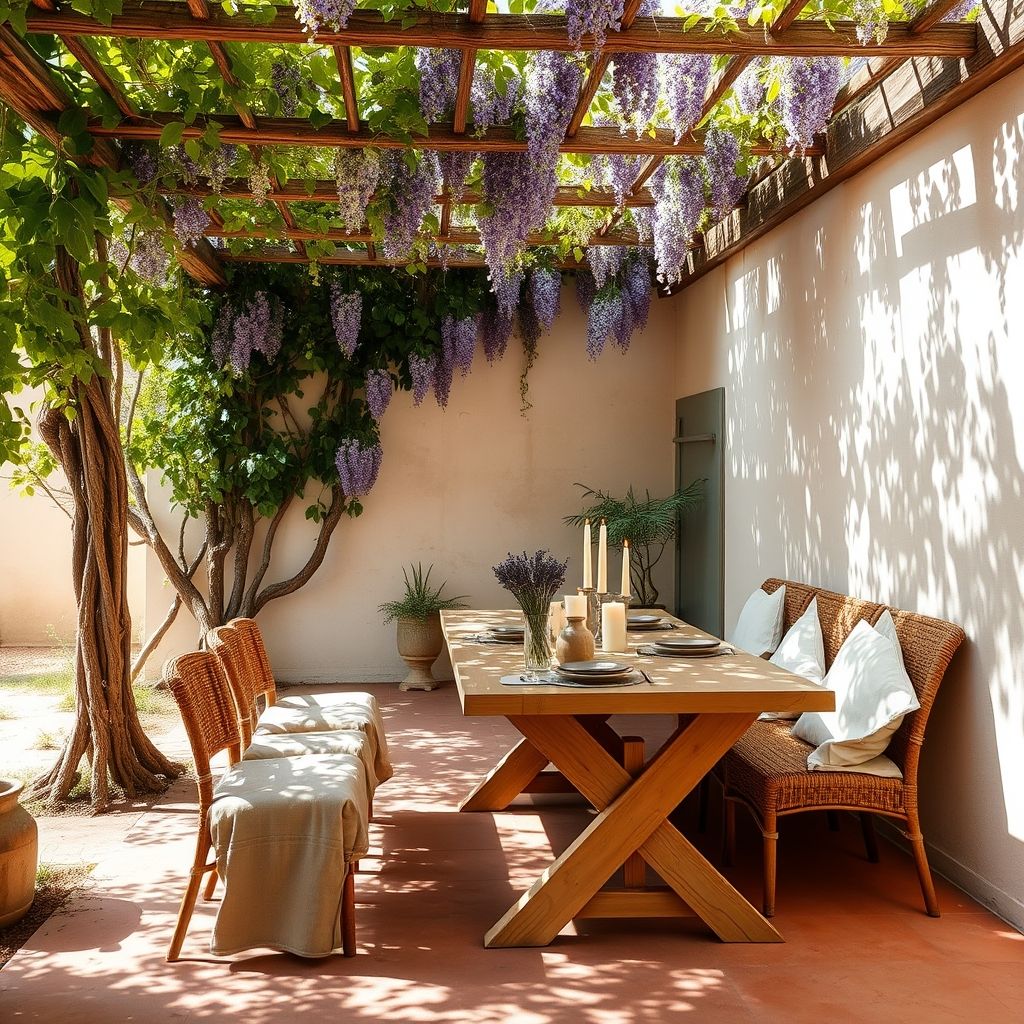
The Antibes sun is direct. It fades, it dries, it splits anything not made for it. So we choose materials that accept age and even improve with it. Silver-grey teak, eucalyptus wood, powder-coated metal in matte tones, woven rope for the seats. For textiles, washed linen, thick cotton and solution-dyed outdoor fabrics hold up far better than fragile prints.