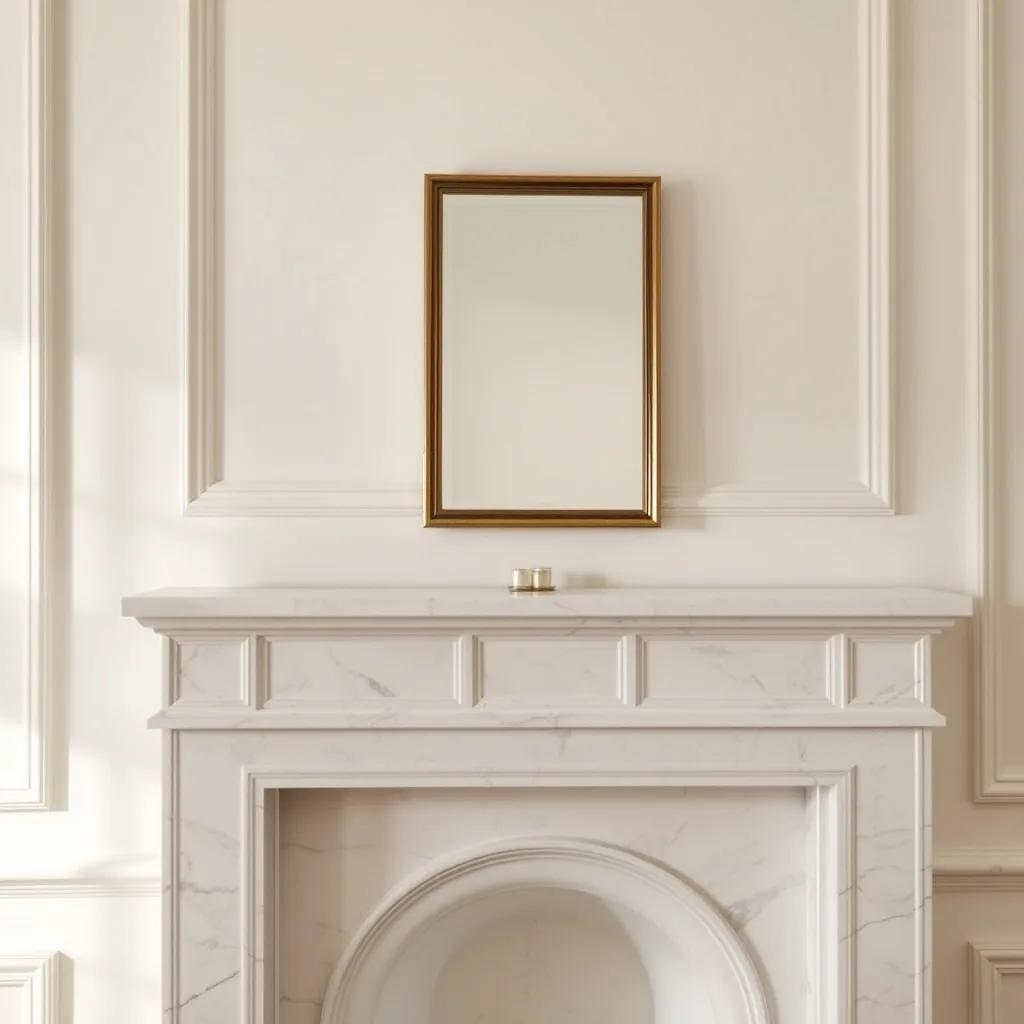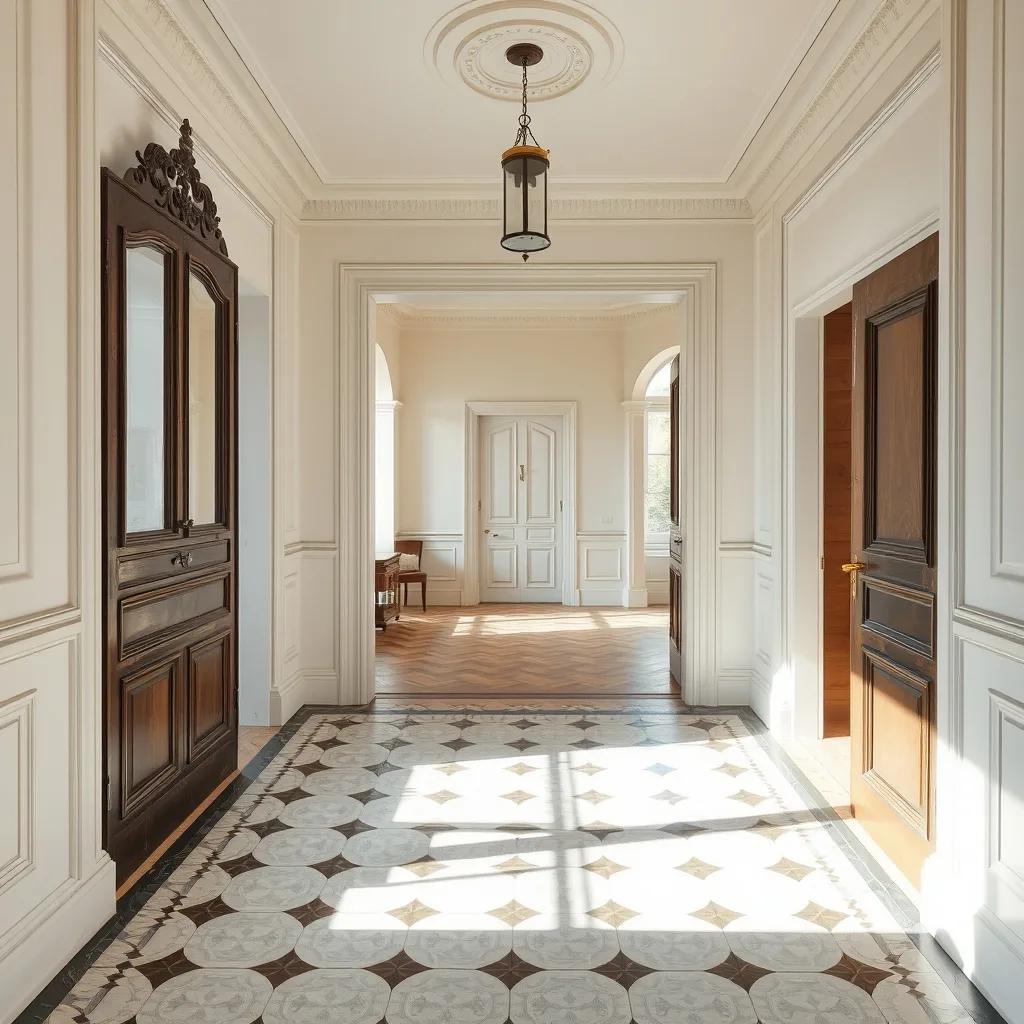
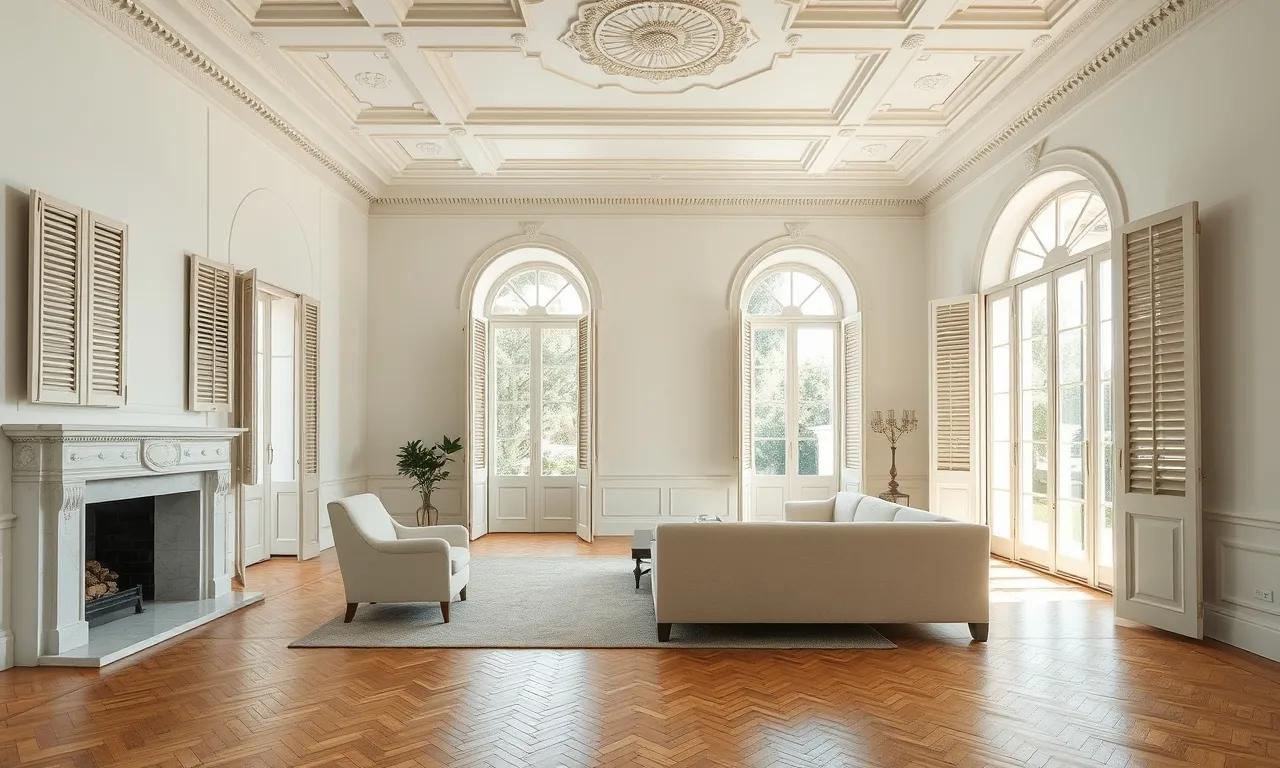
To decorate a Belle Époque villa without weighing it down, keep what gives it character, the mouldings, the parquet, the marble fireplace and the cement tiles, then lighten everything else: pale walls, fewer heavy fabrics, simple furniture and as much light as you can get. A house from this period already has fine volumes. The work of decoration is rarely about adding. It is almost always about taking away, calming things down, and letting the rooms breathe.
On the hills above Cannes, in the Californie quarter, these late nineteenth-century villas look out to sea behind tall shutters. By ten in the morning the light pours through the big windows and hits walls that are often too dark, curtains that are too heavy, and far too much furniture. The room has everything it needs to be beautiful and still feels heavy. At the atelier this is the case we see most often when an owner wants to bring a house of this period back to life.
What makes the bones of a Belle Époque villa
Before deciding what to change, you have to name what deserves to stay. The Belle Époque, on the French Riviera, runs from the middle of the nineteenth century to the First World War. It is a style that loves ornament: stucco façades, friezes, wrought-iron balconies, sometimes a cupola or a pediment. Inside, you find almost always the same elements. High ceilings, often four metres. Plaster mouldings and ceiling roses. Parquet laid in herringbone or chevron. A marble fireplace in each reception room. Cement tiles in the hall and the bathrooms. A wooden or stone staircase with a worked rail.
These elements are the bones of the house. They were made by hand, with materials you will not find again at the same price. Replacing them costs a lot and strips the villa of part of its value. Restoring them costs less and keeps the character intact. Our first piece of advice fits in one line: leave the bones alone and let them show.
Lightening without betraying: walls and colour
The biggest change comes through the walls. Many of these villas have been repainted over the decades in warm, heavy tones, burgundy, bottle green, dark ochre. Those colours swallow the light and crush the volumes. Once the walls go over in off-white, a pale flax or a very soft grey, the room changes scale. The mouldings stand out, the ceiling looks higher, and the Riviera light does the rest.
We like to keep a slight difference between wall and moulding. A faintly lighter white on the cornices and roses underlines the relief without drawing a line around it. When an owner wants a little colour, we keep it for a single room, often a study or a bedroom, in a muted tone that talks to the marble of the fireplace. Faded blue, grey-green and plaster pink age well in these houses and stand up to the strong southern light.