What the entrance says before anything else
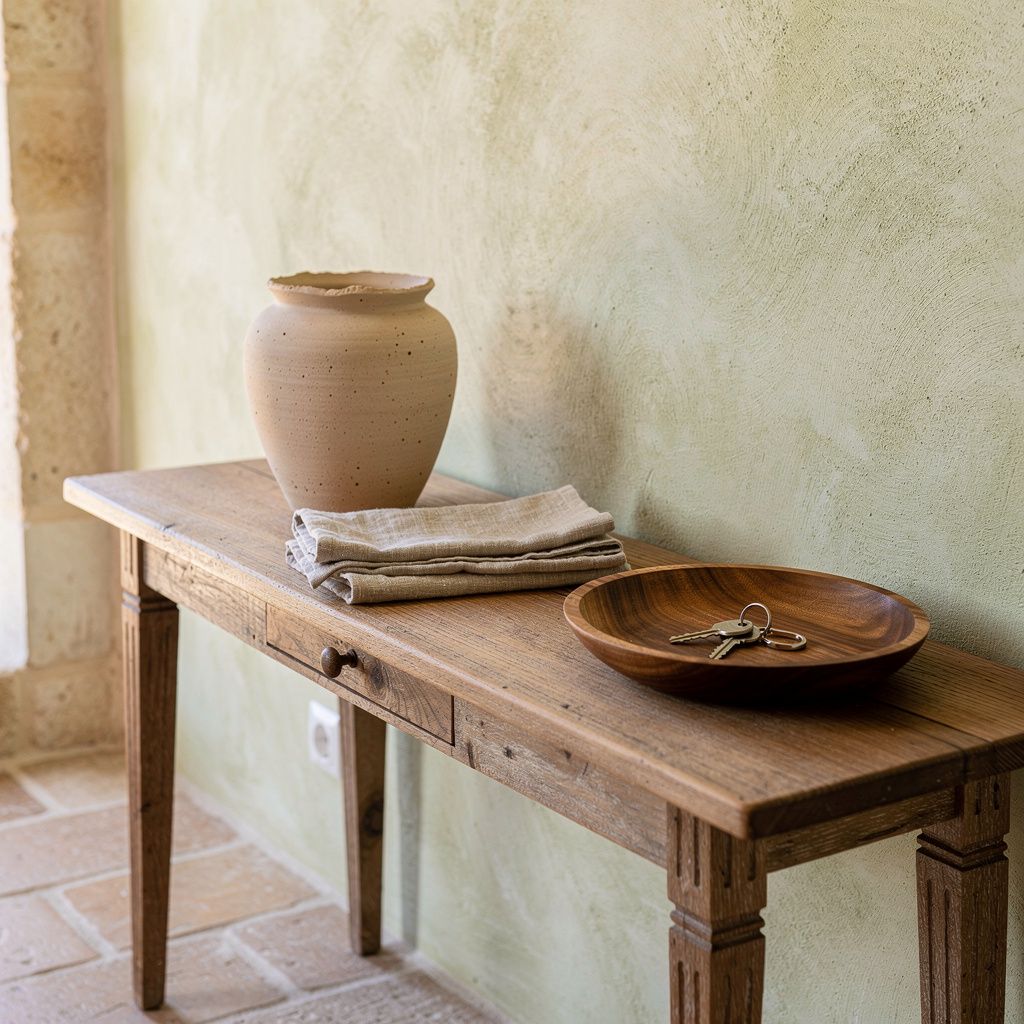
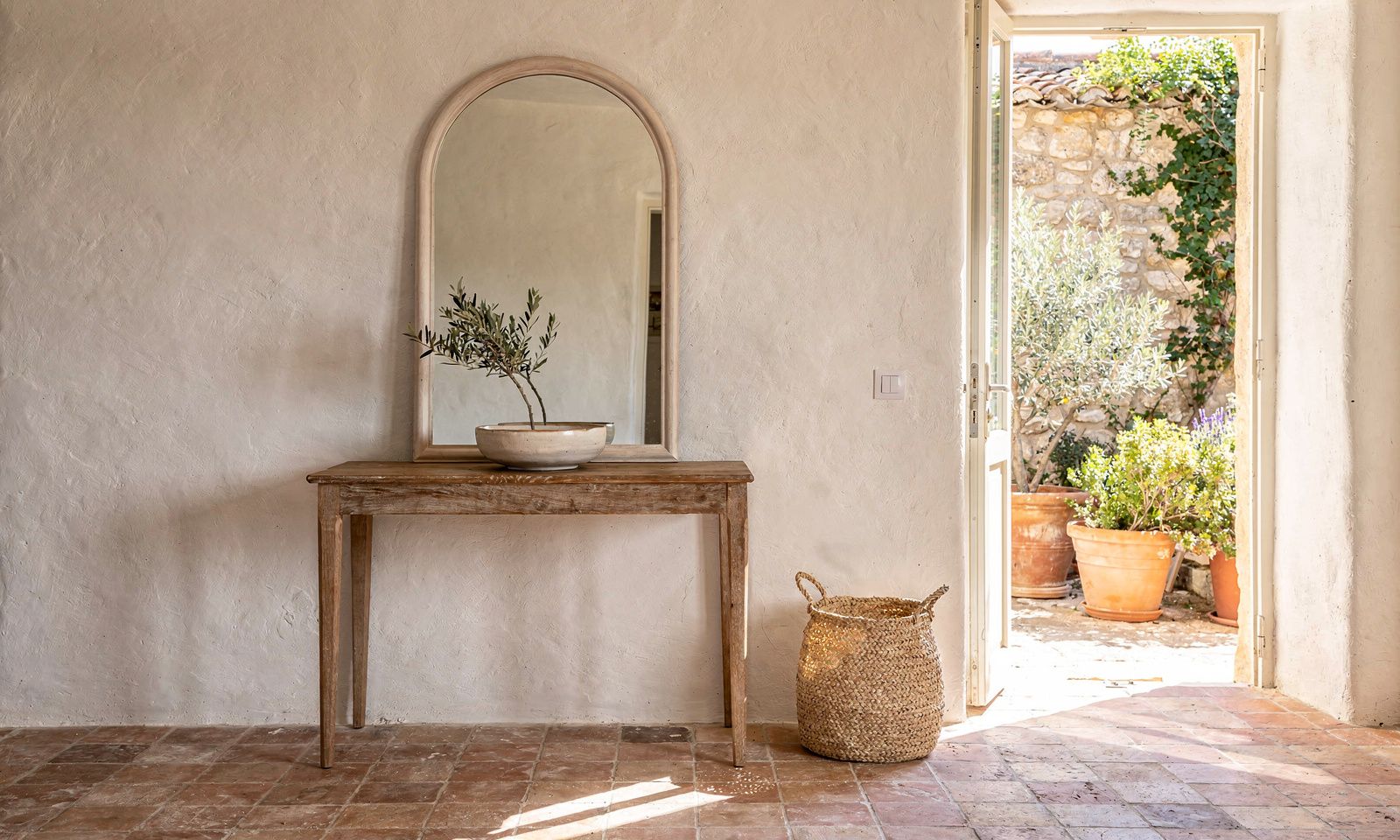
We spend about ten seconds in an entrance. Ten seconds to put down keys, take off a hat, breathe a little. It is very short and it is everything. During those ten seconds the house tells you who it is. A cluttered entrance announces a house that runs. A bare, cold entrance announces a house that defends itself. What we look for sits between the two, a room that breathes and keeps a trace of life, a basket set down, a dried olive branch in a shallow bowl, a pair of espadrilles at the foot of the console.
In Biot the constraint is real. Village house entrances are often narrow, sometimes without a window, frequently crossed by a staircase. We always start from that constraint rather than fighting it. A small entrance can be a fine entrance, provided we give it one strong idea and hold that idea all the way through.
The light of Biot, and how to let it in
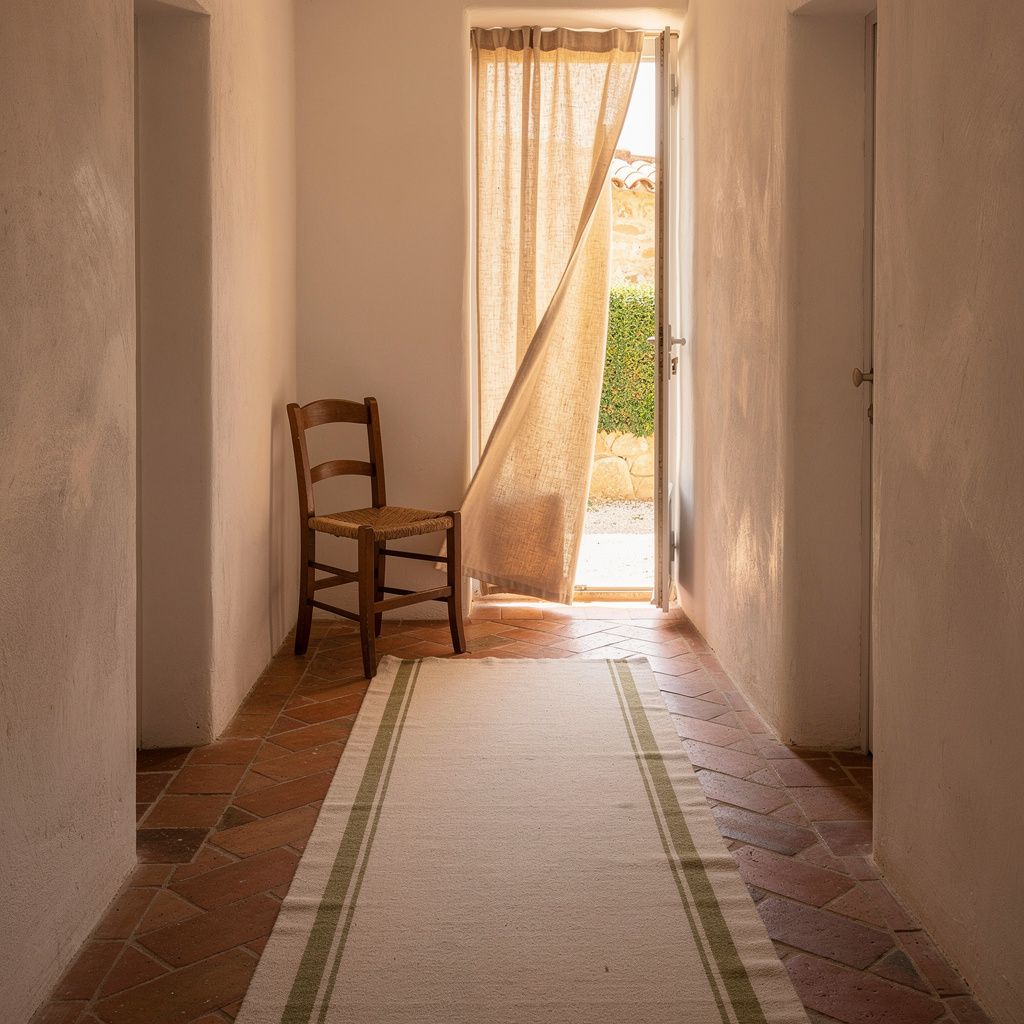
The light of the hills behind Cannes is not the light of the shore. It is drier, more yellow in late morning, pinker as the sun goes down. It rarely arrives head on in a village entrance. It comes at an angle, through a door left ajar onto a courtyard, through a narrow opening high on a wall, through the reflection of the stones across the lane.
Our first move is often to find that light and open a path for it. A mirror placed facing the doorway, never perfectly opposite but slightly offset, sends daylight to the back of the room without glare. An unlined linen curtain on a simple brushed brass rod softens the backlight of the courtyard door and lets a milky light through all day.
When no opening exists, we work with two low sources rather than a ceiling fixture. A small lamp on the console and a wall light aimed at the plaster are enough. Raking light across lime plaster brings out the grain of the wall, and that is worth more than any decorative object.
The walls: lime, plaster and chalk tones
In a village house the walls are never straight. That is a gift. Lime plaster applied with a brush follows those irregularities and turns them into material. We stay within a very short range, chalk white, eggshell, a beige barely pulled towards ochre. These tones keep their coolness in summer and do not close in during winter.
If the wall is sound and already painted, a matt mineral paint gives a close result without the relief. What matters is the absence of shine. An entrance that reflects light harshly always looks smaller than it is.
One wall can take a slightly deeper tone, a greyed olive green or a muted terracotta, usually the wall you face as you come in. You see it on entering and then you forget it. That is exactly the job we ask of it.