What a mirror actually does to a room
A mirror does not make light. It moves light. That distinction changes everything, because it means a badly placed mirror does not simply fail to work. It shows you a second time whatever you would rather not have seen. A blank wall, a dead corner, the door to the downstairs loo.
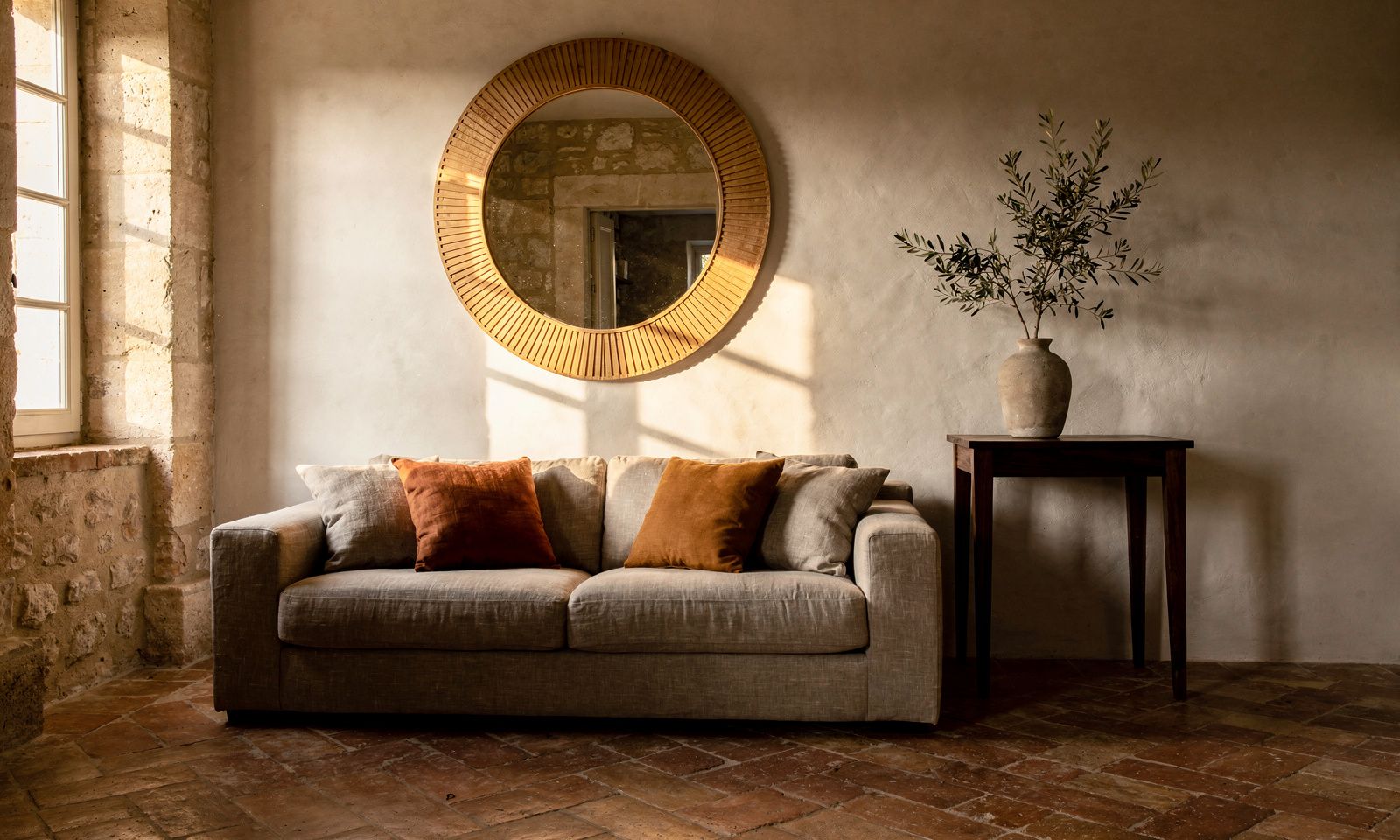
So we always begin with the same question, and it has nothing to do with the mirror itself. What sits opposite the wall you want to dress? A window, a good glazed door, a stretch of lime-plaster wall that takes the four o'clock sun beautifully? Then the mirror has a subject. If not, it has none, and no amount of brass framing will rescue it.
In Châteauneuf-Grasse this reasoning pays off particularly well. Houses here usually face south or south-west, with deep openings and thick walls that keep the heat out but leave the back of each room in a soft gloom. A well-placed mirror collects the light at the threshold and carries it two or three metres further inside. That sounds small, and it is enormous when the room runs five metres deep.
Read the light before you choose the mirror
We often ask clients to do something very simple before they call us. Take three photographs of the room from the same spot, at nine in the morning, three in the afternoon and seven in the evening. In autumn, the difference between those three is dramatic in the hills above Grasse.
Those images say most of what we need. They show where light enters, where it stops, and at what hour the room goes flat. A mirror on the wall that still holds light at seven extends the evening. The same mirror on the opposite wall only earns its keep between noon and two.
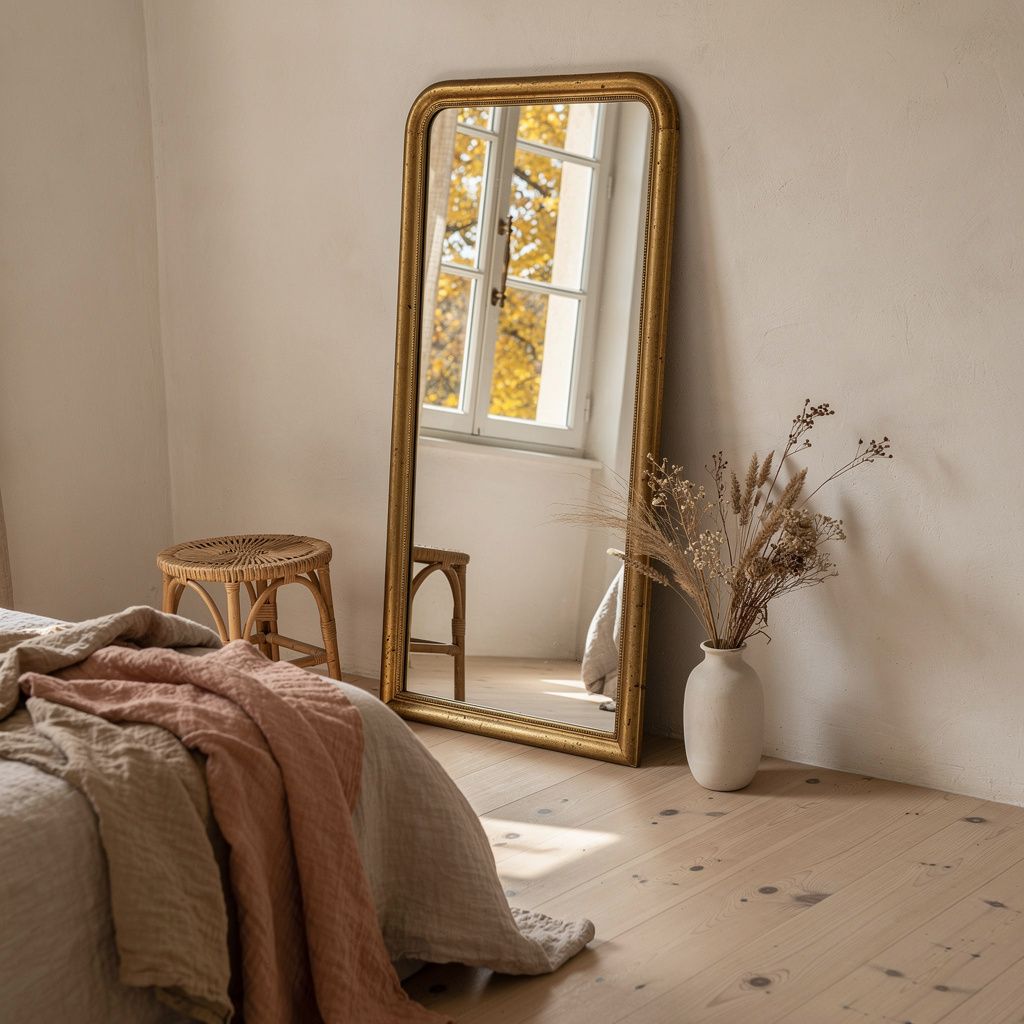
A second measure matters just as much: eye height. The optical centre of a mirror should sit between 150 and 160 centimetres off the floor in a living space. Higher, and it reflects ceiling, which interests nobody. Lower, and it cuts people off at the neck. The one exception is the floor mirror, which follows a different logic and which we come to further down.
This season's shapes: round, free, almost sculptural
2026 confirms a shift that has been building for two seasons. The strict rectangle is retreating and free outlines are moving forward. Stretched ovals are back, along with arch shapes and irregular edges that look closer to a river stone than to a joiner's frame.
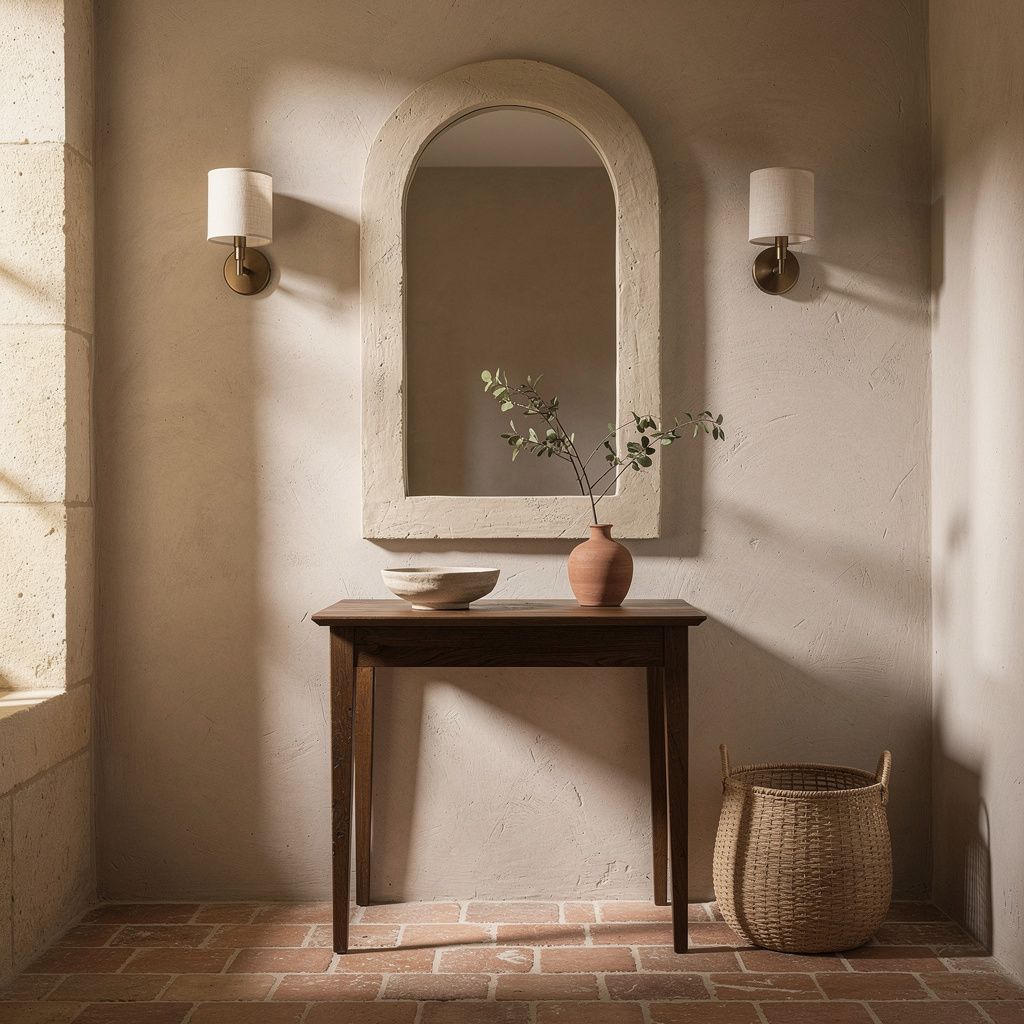
That suits us, because these shapes sit well with the old buildings of this area. An arched mirror answers the curved lintels, the plastered niches and the low vaults in a bastide corridor. Where a large black rectangle introduces tension, an arch settles in quietly.