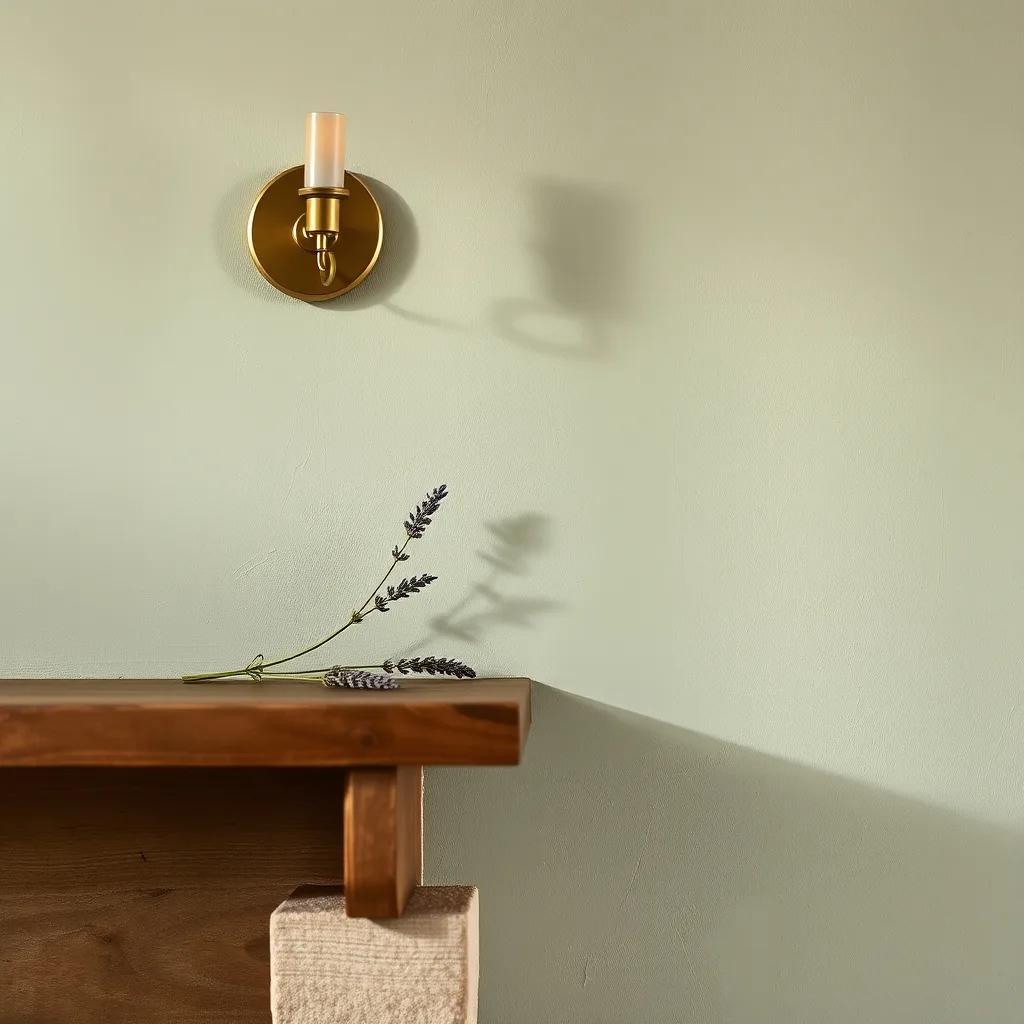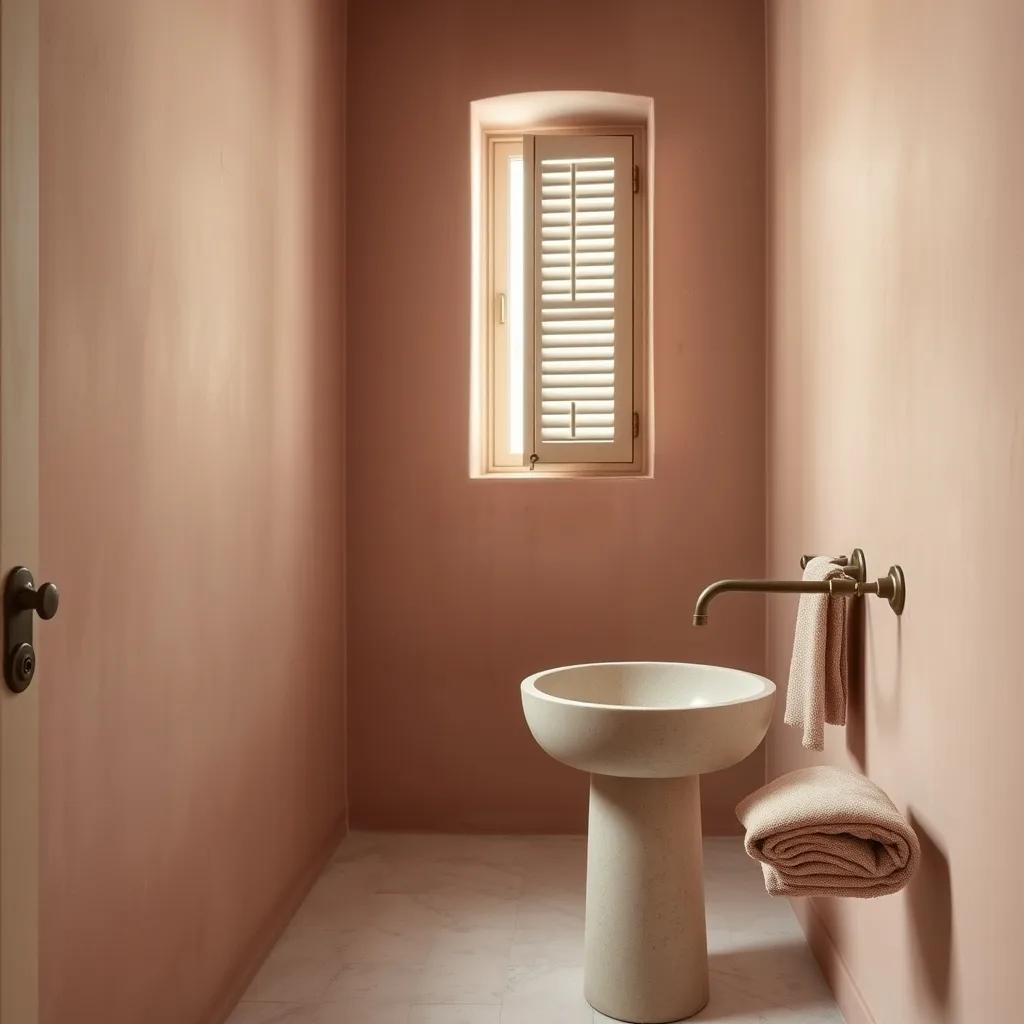
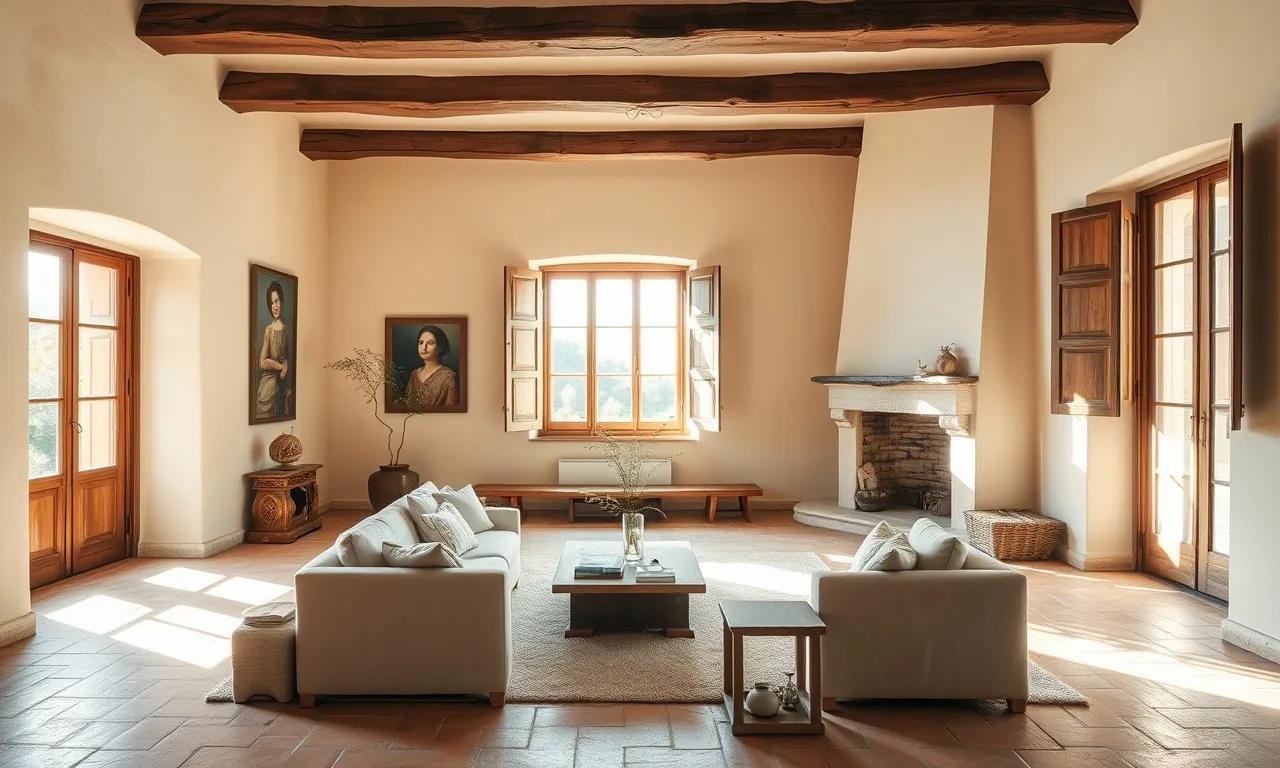
To choose a lime finish, start with the state of the wall and the look you want. A limewash lays colour and a light patina over a wall that is already sound. A lime plaster adds body and a little relief, and it evens out an uneven wall. A polished lime, or stucco, tightens the surface to a smooth, satin finish. Tadelakt, the most technical of the four, is mainly for wet rooms. On our decoration projects between Valbonne and the Grasse villages, this is almost always the first question that comes up, before colour even enters the conversation.
Lime has a long history here. On the facades of Valbonne village, on the stone bastides around Opio, in the tall houses of Grasse, lime render has been part of the built fabric for centuries. Indoors, the same material settles a room. It absorbs light rather than bouncing it back, and on the Riviera that light stays strong for much of the year.
Limewash, lime plaster, stucco, tadelakt: what each one actually does
These four words get mixed up constantly, and the confusion gets expensive the moment you order work. Here is how we tell them apart on site.
Limewash is lime heavily thinned with water and brushed on in fine coats. It colours the wall and lets the surface show through. It is a soft finish, meant for a wall that is already flat and sound. It regulates moisture in the air and keeps the wall breathing.
Lime plaster is thicker. You trowel it on in coats of a millimetre or more. It adds body, hides minor flaws and creates the living relief you recognise in old Provencal houses.
Stucco is a fine lime plaster pressed smooth with a steel float until it reads as a soft, matte surface. It gives subtle, marbled effects without the shine of paint.
Tadelakt comes from Marrakech. It is air lime mixed with marble powder, worked and burnished with soap until it resists water. We keep it for bathrooms and kitchen surfaces. Laying it well takes a real hand, so we bring in specialist applicators for it.
Air lime or hydraulic lime: which one for your walls
The type of lime matters as much as the finish. Two families, two uses.
Air lime, sometimes called fat lime, comes from very pure limestone. It hardens slowly as it meets the carbon dioxide in the air, a process called carbonation. It moves with a old wall without cracking and lets the masonry breathe. This is the lime we keep for the finish coat, the one that carries the colour, and for limewashes and stuccos.
Hydraulic lime, or NHL, contains a share of clay. It sets in the presence of water, faster and harder. We use it as a base coat, on walls that need a firm substrate, and in damp rooms.