The light in Opio, and what it asks of a window
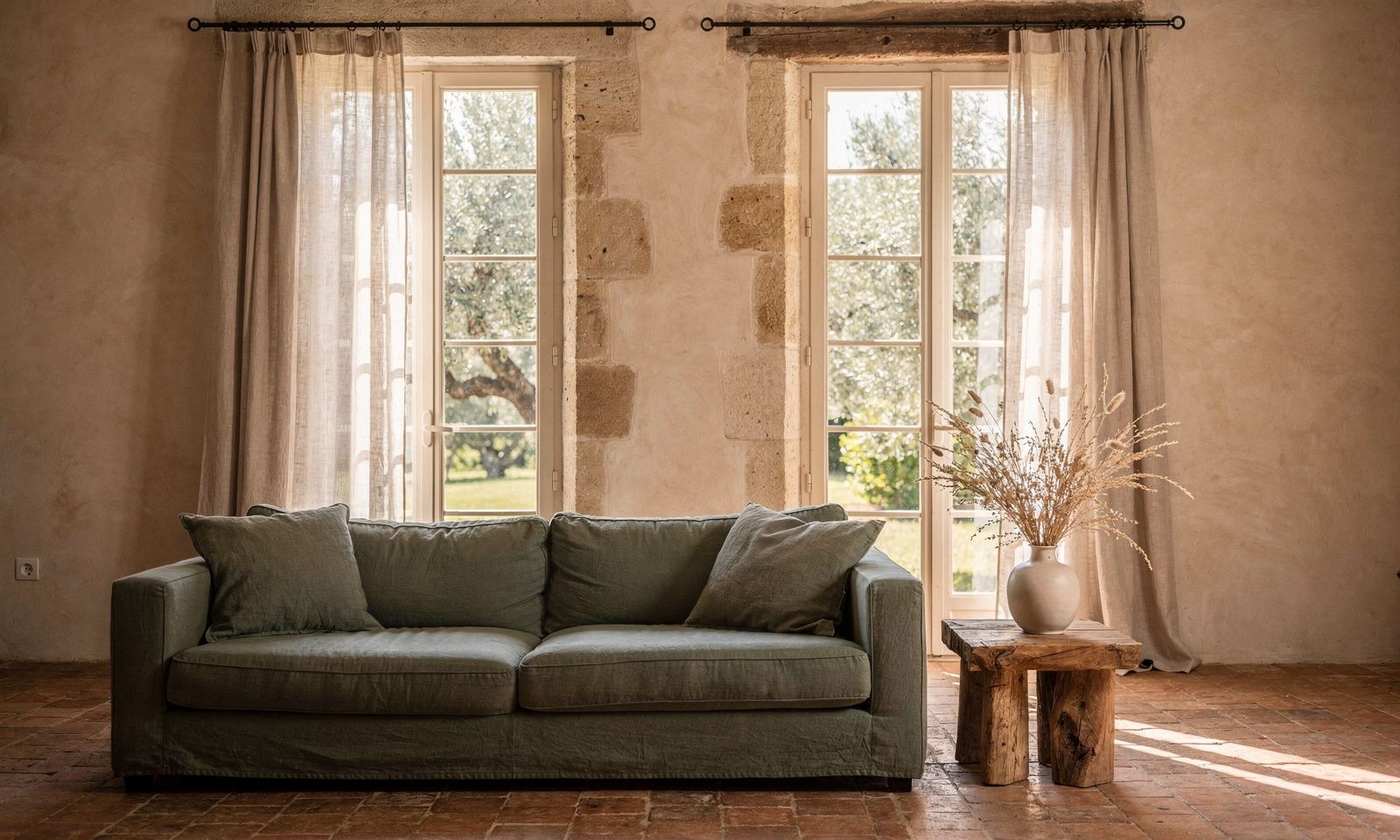
Opio is a hill village between Valbonne and Chateauneuf-Grasse, set among olive groves. The houses here tend to have tall narrow openings on the north side and wide french doors on the south. That asymmetry is the first thing we look at. A south facing room takes direct light for seven or eight months of the year, and that light heats the room, fades fabric and tires the eyes at the end of the day. A north facing room takes a soft steady light instead, and the worst thing you can do is smother it under heavy cloth.
So window textiles are never only decorative. They set the temperature of a room, the way you see inside it, and how private it feels from the lane or the neighbour's garden. In a village house where facades face each other a few metres apart, that last point often matters more than everything else put together.
Sheer, curtain, lining: what each layer does
We almost always work in two layers, sometimes three. The logic is simple and easy to remember.
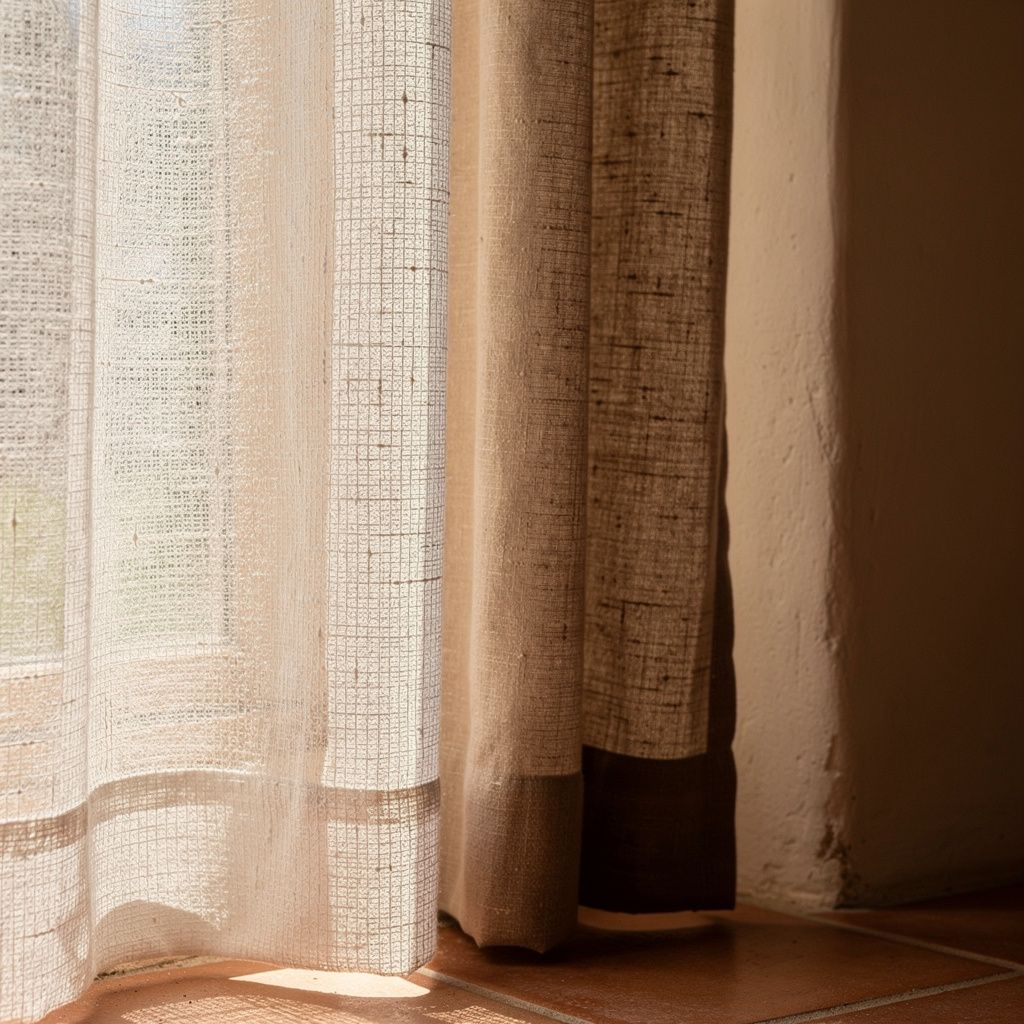
The sheer is the layer closest to the glass. It filters, it spreads the light, and it blurs the view from outside without cutting the brightness. A good sheer in loose linen or cotton gauze gives light a particular grain, almost powdered, that bare glass never produces.
The curtain is the heavy layer. It closes, it insulates against the cold in January and the heat in July, and it brings the colour. Most of the time it stays open, draped to the sides, working as a textile border that frames the window and stretches the wall.
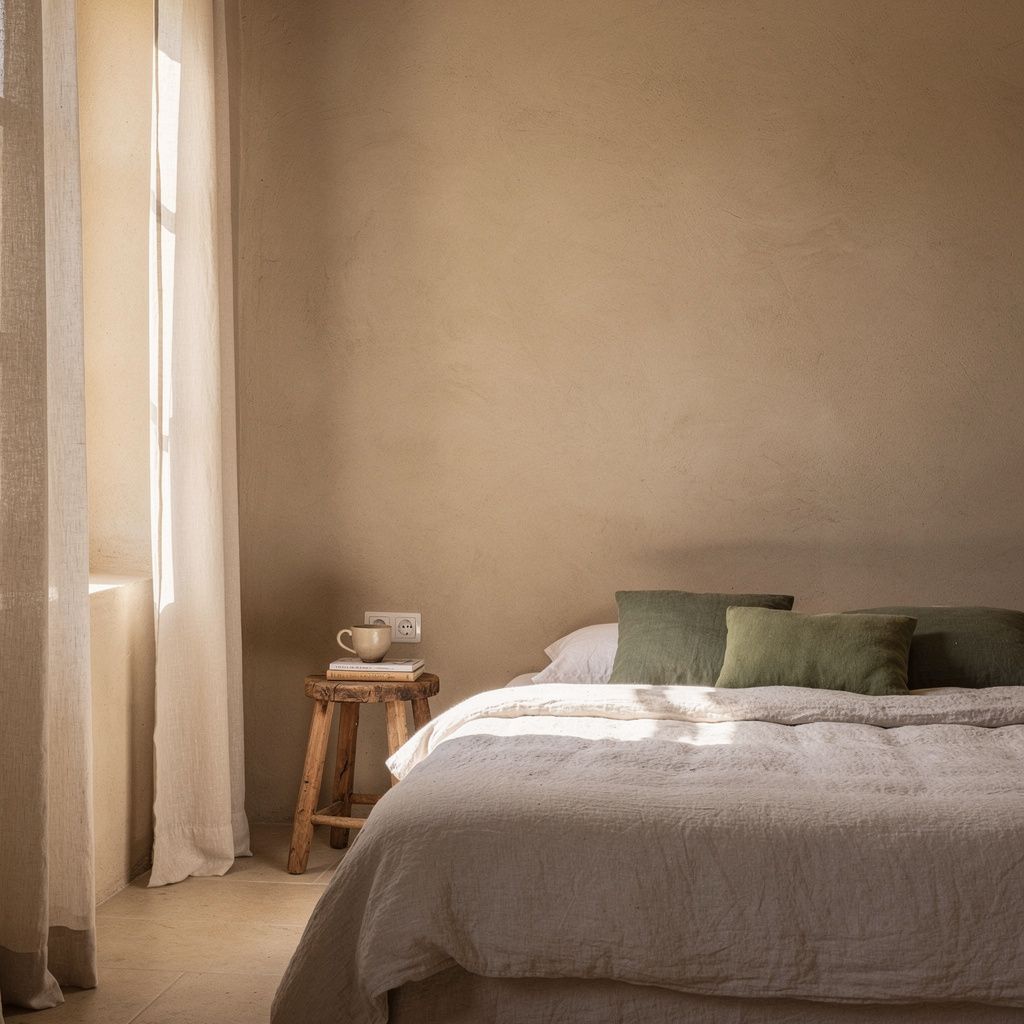
The lining is optional and decisive in the south. A blackout lining in a bedroom changes the quality of sleep from May onwards. A plain lining, not blackout, is enough in a living room and mainly protects the fabric from fading.
The materials we choose for the Cote d'Azur
Linen is still our reference material, and not only out of habit. It breathes, it handles humidity, it falls with a natural weight that nothing else matches, and it ages well. Washed linen accepts creases, which is a quality here, because nobody irons three metre curtains.
Cotton, as gauze or a thicker voile, costs less and washes more easily. We use it happily in children's rooms and kitchens, where fabric lives a harder life.
Hemp is rarer, with a rougher hand and an irregularity we like a great deal. It suits old houses with limewashed walls, where a material that is too smooth jars immediately.