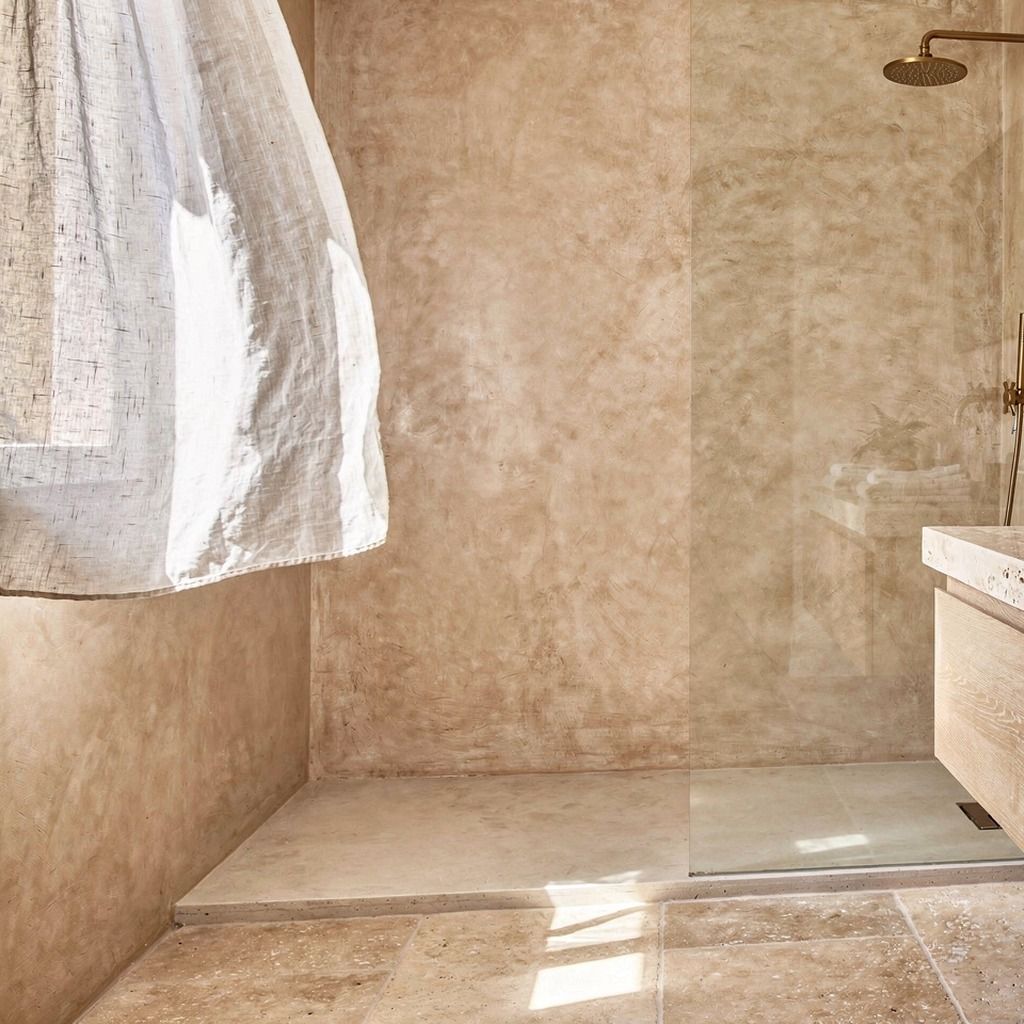
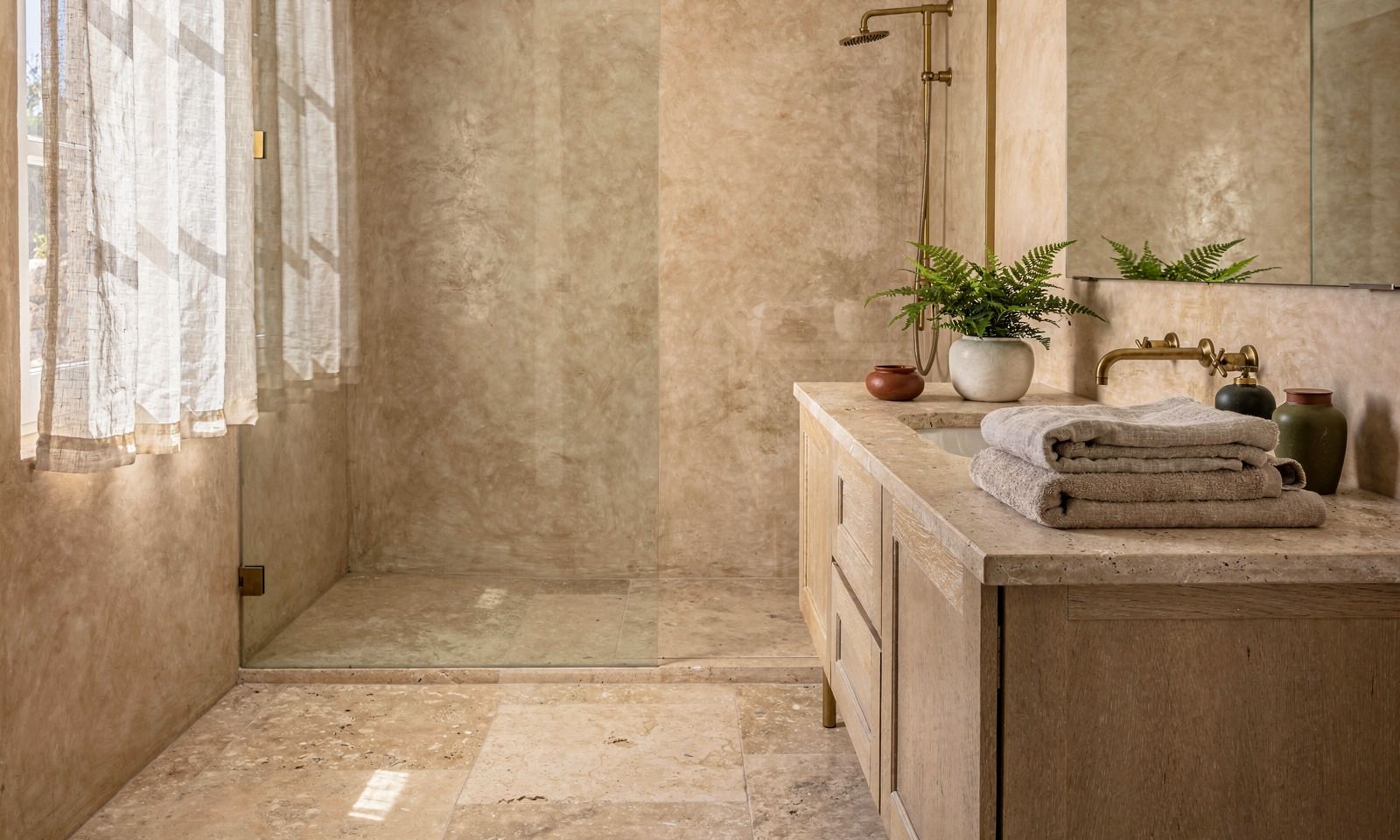
When summer settles over Valbonne, the bathroom becomes a small room to retreat to. We like to find a little coolness there at dawn and at dusk, when the stone still holds the softness of the night. At Emicasa, we treat this room as a calm place, turned towards natural materials and southern light. Here is how we compose a Provencal bathroom that breathes, season after season.
Natural stone, a material that keeps things cool
Travertine and limestone are back in our projects this year. Their matte, lightly textured surface stays cool under the hand, even at the height of July. We lay them on the floor, on a basin top or as a small splashback behind the sink. Local stone, warm beige or grey, sits well with the old terracotta tiles still found in Valbonne houses.
We prefer a honed finish rather than a polished one. It catches less light, ages with grace and hides the small marks of daily life. Stone that is too glossy tires the eye and turns slippery under wet feet. Honed, it stays quiet and safe. Laid in large formats, with thin and very discreet joints, it gives the room a peaceful, almost monolithic feel that lets the material speak for itself.
Lime plaster and tadelakt
On the walls, we like lime plaster and tadelakt. These mineral finishes let the room breathe and cope well with the humidity of a wet room. Their soft relief catches light in a living way through the day, from the blue of morning to the amber of evening. A sanded tadelakt around the shower creates an almost continuous surface, with no marked joints, pleasant to live with and easy to clean.
The tones are chosen among sands, pale earths and warm greys. We suggest keeping one wall a little deeper, behind the bath or the basin, and leaving the others lighter, so light moves without obstacle. Lime also brings a natural regulation of humidity, which matters in a wet room used every morning by the whole family.
A soft, mineral palette
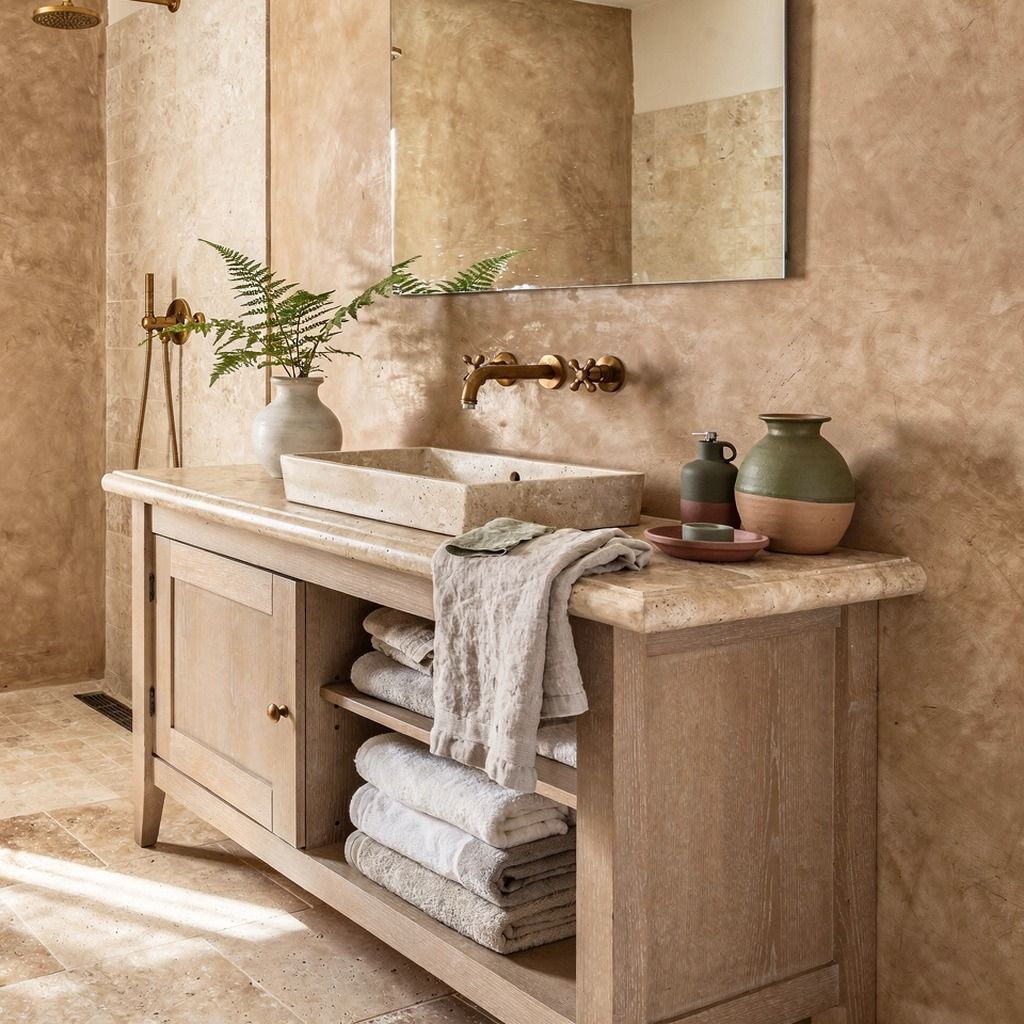
The colours of a Provencal summer bathroom stay close to nature. We often start from a cream or linen base, warmed by touches of terracotta, ochre and olive green. These tones recall the hills around Valbonne and the late-June gardens, when the lavender is only just starting to colour. Pure white we use sparingly.
It cuts too sharply against stone and lime, and it hardens the light. An off-white, a little greige, works better and softens the whole. For accents of colour we stay measured: a saffron towel, an olive-green soap, a plant set on the ledge are enough to enliven the room without crowding it. Simplicity remains our guiding thread.