Why the floor changes everything in late season
A room is judged first by what happens down low. Bare tile throws back sound, throws back light and throws back cold. You can add cushions, heavy curtains and three lamps, and the room will still feel loud and a little hard as long as the floor stays bare. It is a question of physics as much as decoration. Fibres absorb the high frequencies, hold air and slow the sensation of chill underfoot.
In houses around here the effect is amplified. Hexagonal terracotta tiles, pale stone, the large formats laid in the 2000s, all of these floors are made for summer heat. They do their work admirably from June to September. Then October arrives, and the same room that felt cool and calm simply feels cold.
A rug is the only piece of furnishing that acts on three senses at once. Sight, touch and hearing. So we put it down before buying anything else.
Wool, for softness and warmth
Wool is still our reference material when a room has to be comfortable barefoot. It is dense, slightly matt, and it absorbs light instead of bouncing it back. On the Côte d'Azur, where the late season sun still comes in low and strong through south facing rooms, that quality matters more than people expect. A shiny rug creates an unpleasant sheet of glare at the end of the day. Wool never does.
Wool also has memory. It comes back into shape after a piece of furniture has stood on it, it survives the traffic of an entrance hall, and it ages by softening rather than by wearing out. A hand knotted wool rug lasts thirty years in a family house. A synthetic rug lasts five and starts to shine along the walking lines.
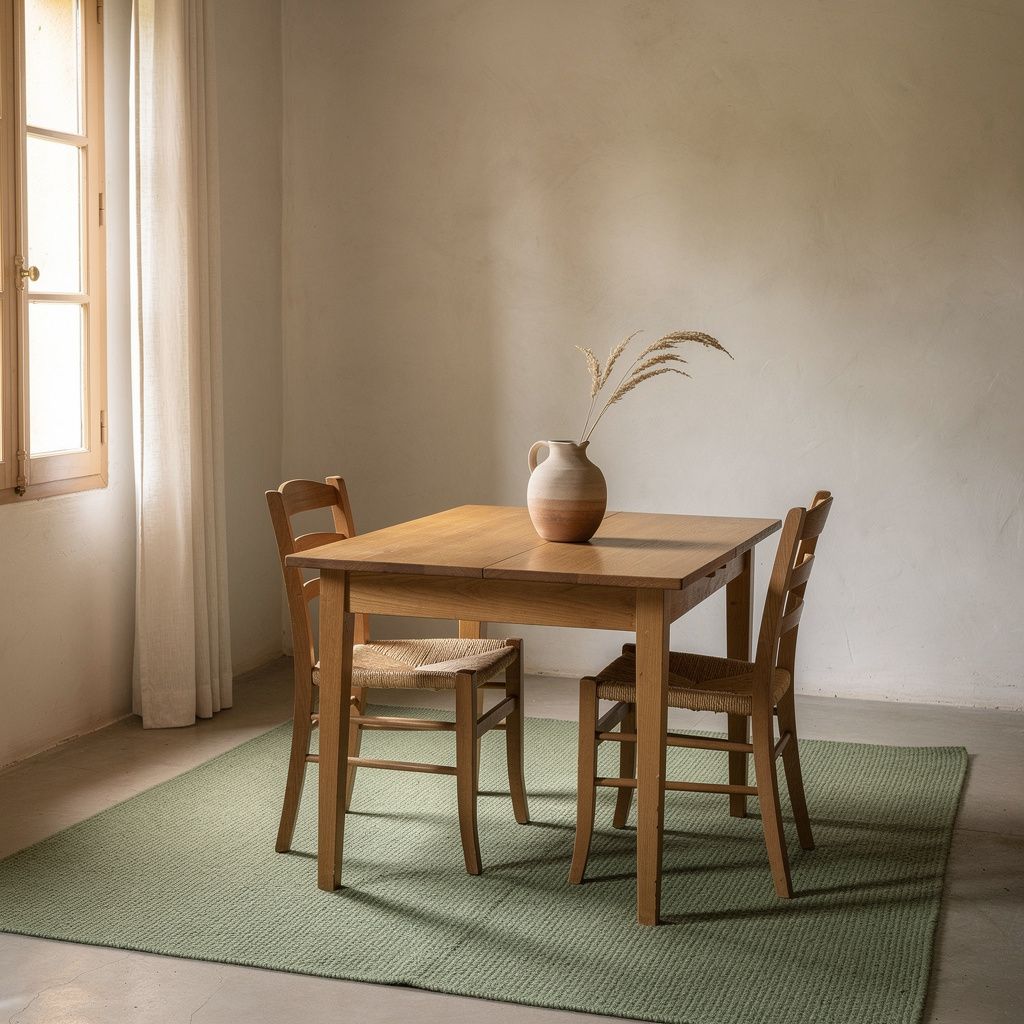
We suggest a thick, slightly irregular wool for sitting rooms and bedrooms, and a flatter woven wool for dining rooms, where chairs need to slide without catching. The price is higher at the start. Spread over the years, it is not.
Jute and sisal, to anchor the room
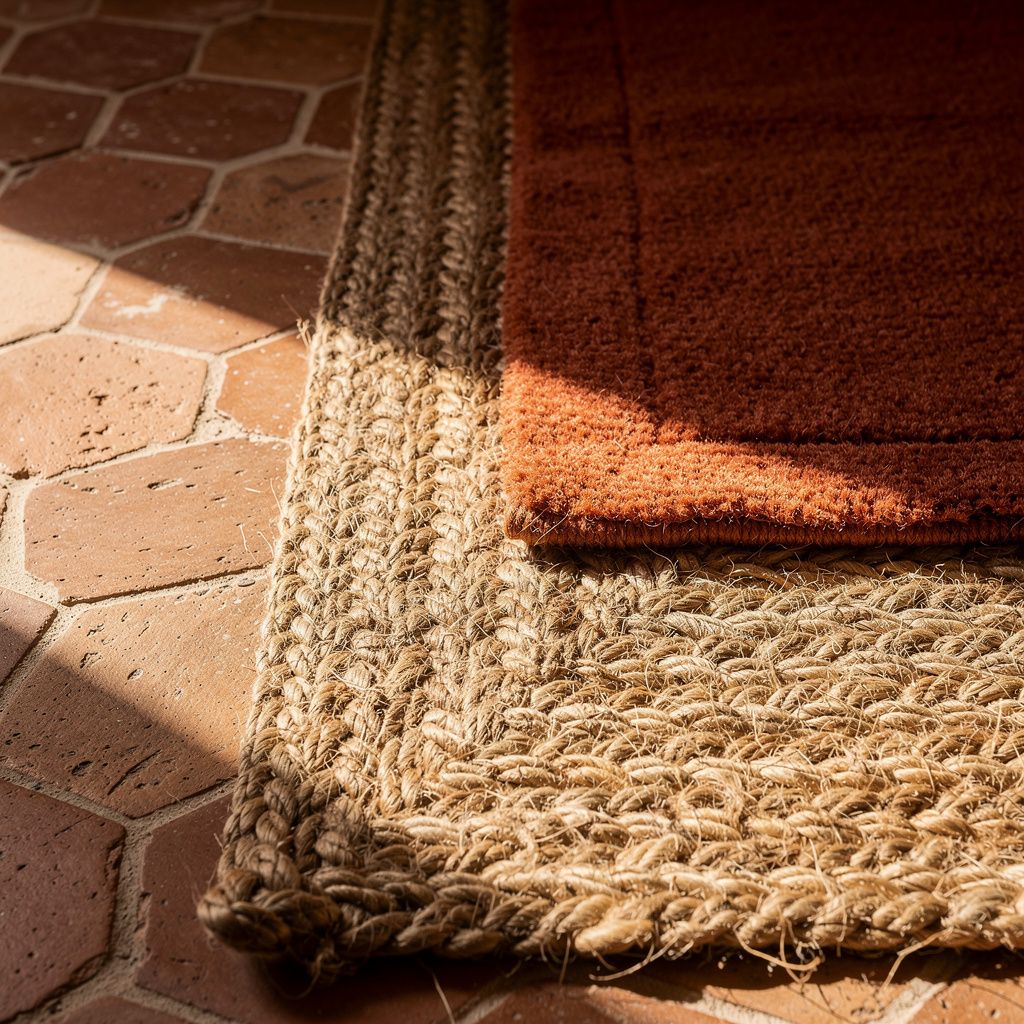
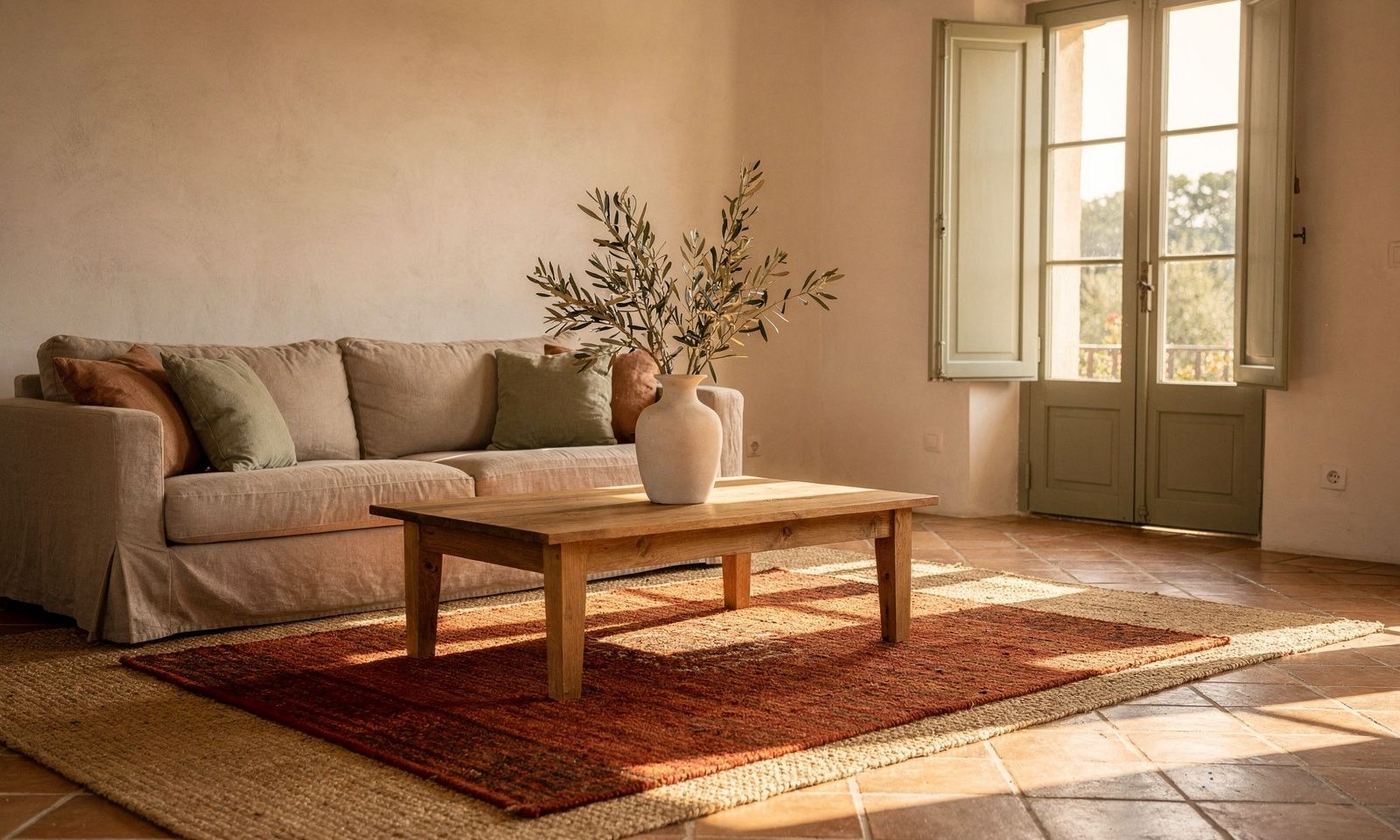
Jute plays a different part. It is not there for comfort, it is there to settle the room. Its braided, slightly rough weave gives a neutral and living base against which everything else reads better. A linen sofa, an oak table, a piece of Vallauris pottery.
We are especially fond of it in very pale houses, the ones where lime washed walls and wide openings can leave a feeling of drift. Jute anchors. It brings the floor a warm straw colour that recalls the hills behind Mouans-Sartoux at the end of summer.
Its limits are real and worth knowing. Jute dislikes water, which rules it out of bathrooms and exposed entrances. It sheds a few fibres in the first weeks while the weave settles. And it is not soft underfoot, which makes it a poor choice beside a bed.